In June 1951, Bob Davies was fifteen years and two months old. His father arranged a summer job for him on an oil tanker. Bob wanted baseball. He got a ship. Then he went back for every summer of high school.
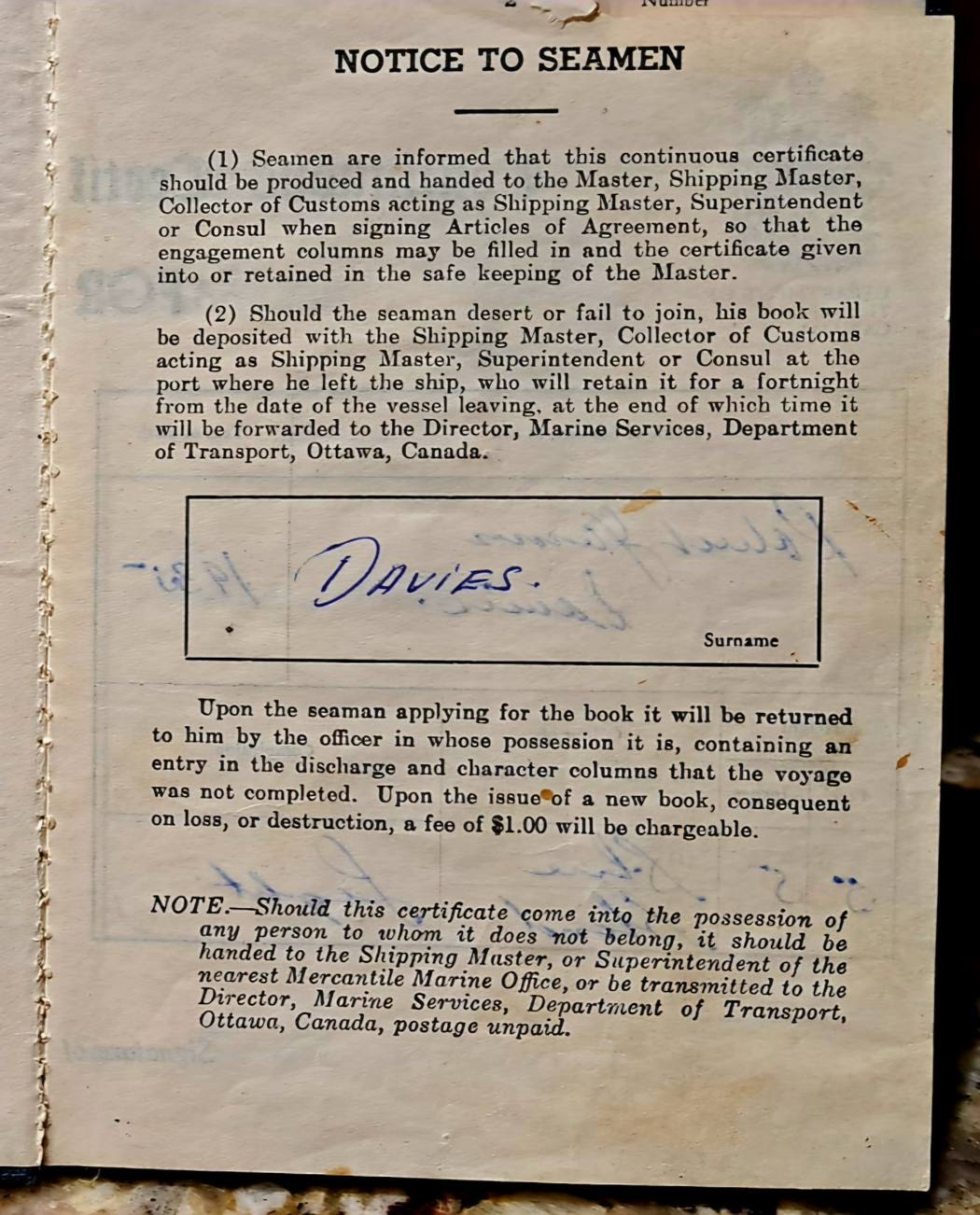
27710The number stamped inside the book that saved the story.
Part I
Meet Bob
Before he was Grandfather, he was a teenager only a few birthdays older than the readers of this edition.
Start here
He was almost your age
Robert James Davies was not born “Grandfather.” Everyone called him Bob. Before the grey hair, the rocking chair and twelve grandchildren, he was a high-school kid who played sports, got into enough mischief to earn a nickname, and spent his summers doing a job he did not particularly want.
If you are ten, Bob was only five years older than you when this story begins. If you are fourteen, he was one year older. At fifteen he was already signing a government seaman's book and boarding a tanker that would carry him away from Sarnia.
Edward + Eileen Bob's parents Joan · Ted · Bob · Reg · Diane
→
Bob + Donna married 1957 Brenda · Cheryl · Judy · Sandra → 12 grandchildren
Brenda, his eldest daughter, supplied the sentence that explains the whole book: her dad worked on ships during his high-school summers, he did not like it because he wanted to play baseball, and his father got him the job.
So what does a teenager do when the summer he wants and the summer he gets are completely different?
Bob went. More importantly, he kept going. The document that survived tells us exactly when.
Book No. 27710. Small enough for a pocket; durable enough to carry a five-year story.
Part II
Five Summers, Ages 15–19
Measure this part in birthdays rather than decades. Bob moves from fifteen to nineteen one working summer at a time.
The evidence
Five summers, ages fifteen to nineteen
Use the age buttons as a map. The years matter, but Bob’s age is the main clock in this edition.
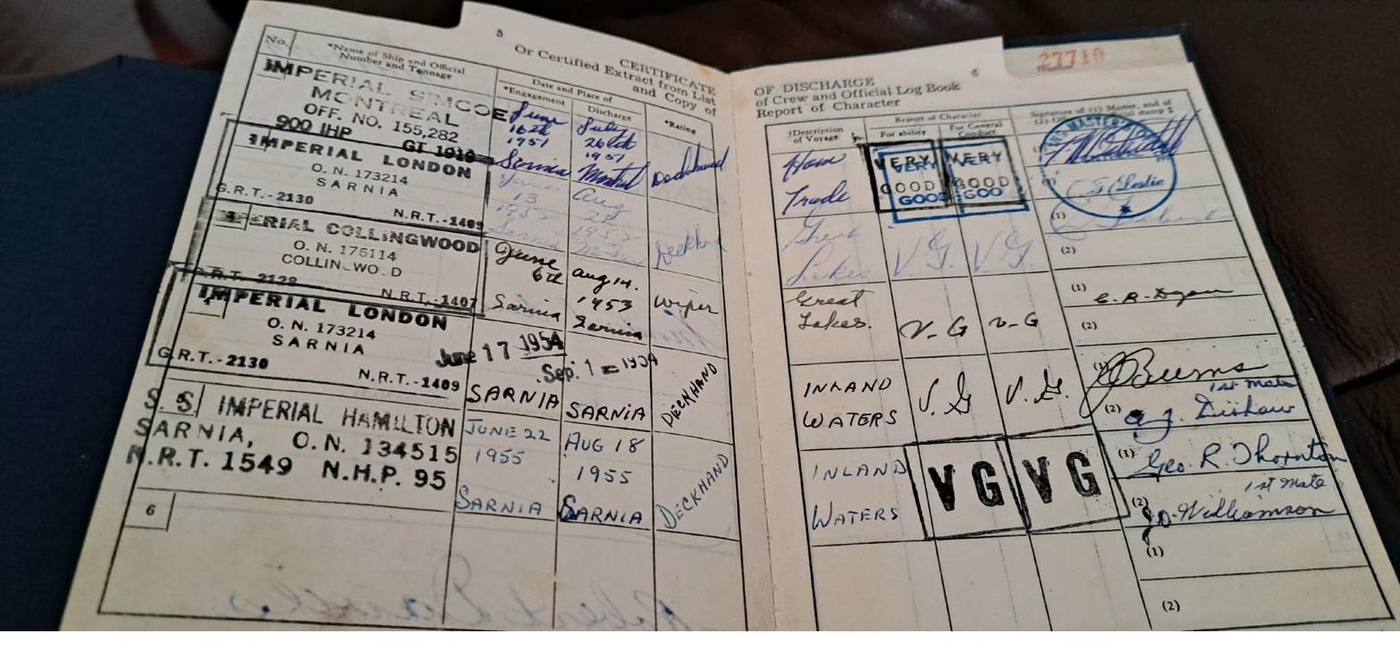
The almost-invisible row: the 1952 entry was written in pencil. After more than seventy years it is so faint that the family nearly mistook it for a mark from the other page. The matching character report proves the fifth engagement is real. A weak pencil line nearly removed an entire summer from the family story.
The facing page gives five matching rows — independent evidence for five summer engagements.
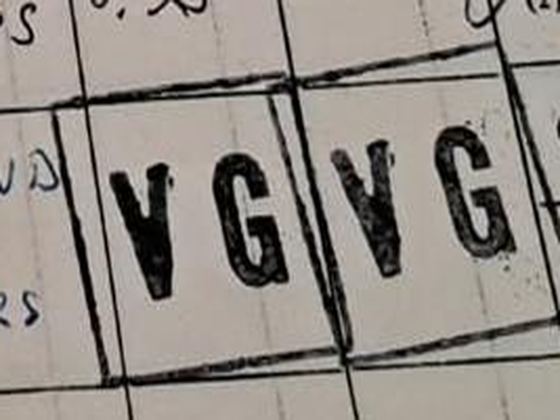
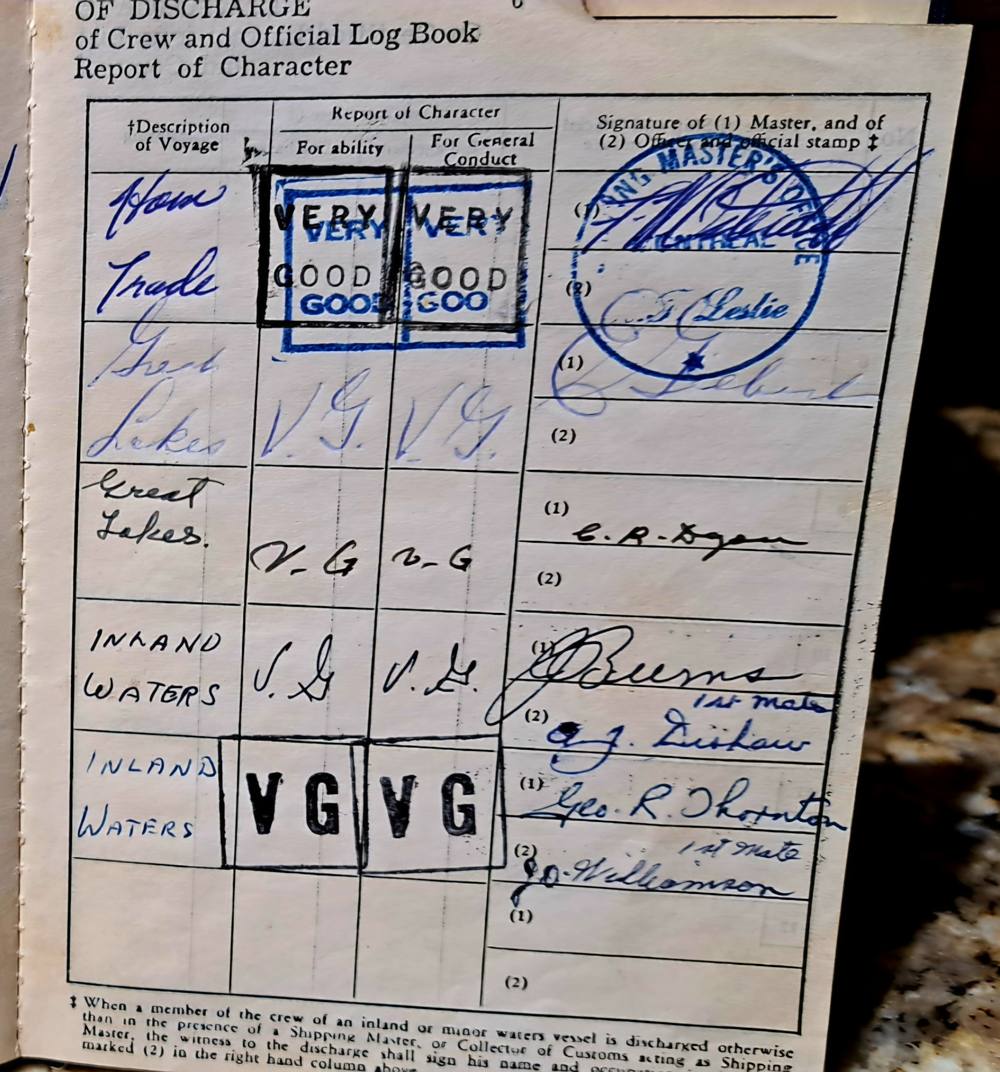
VERY GOOD · VERY GOOD
Every summer, Bob was rated once for ability and once for conduct. Every surviving rating says the same thing.
Two little judgments that survived longer than most of the people who wrote them.
Case 1 · The wrong year
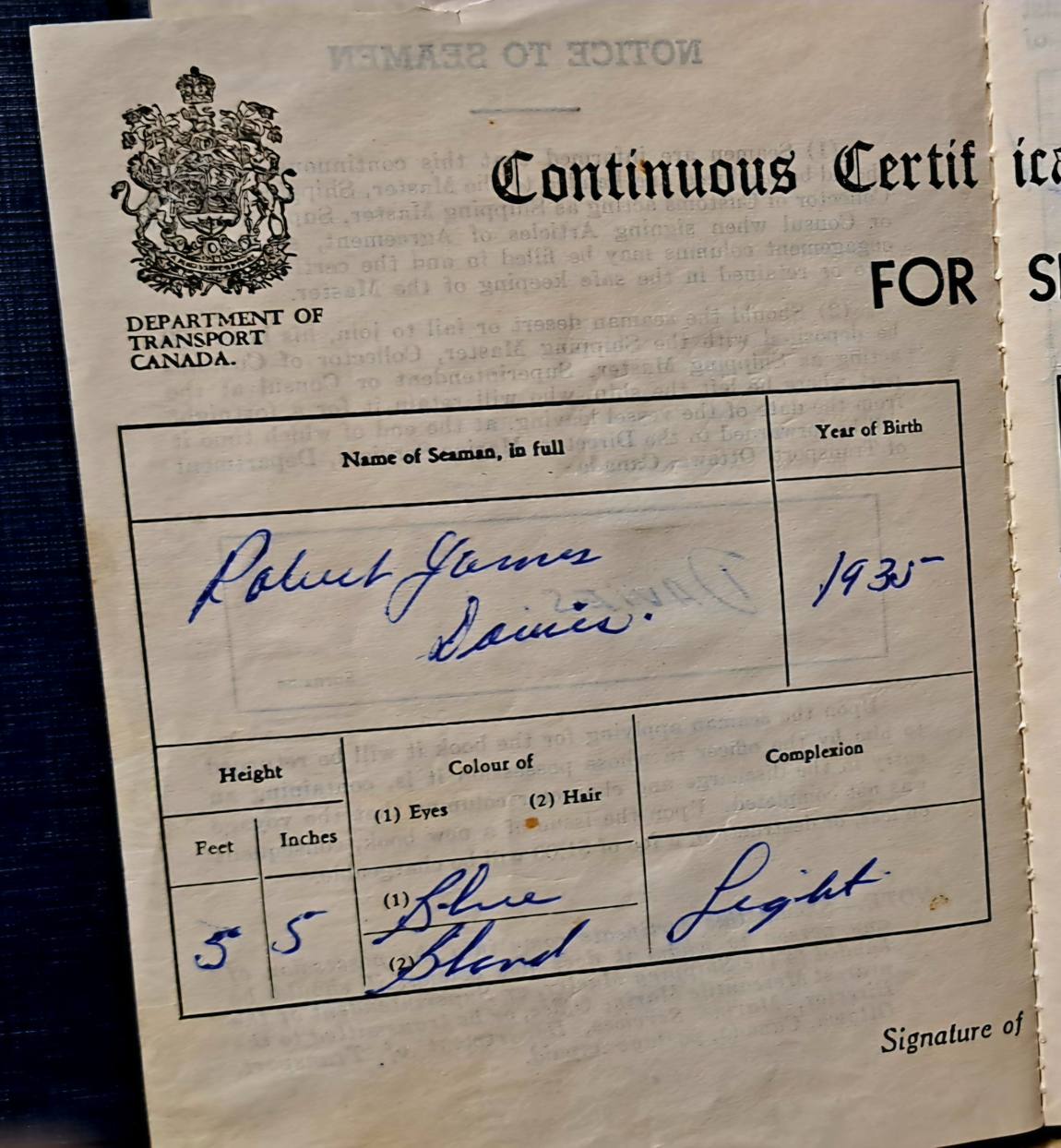
The book says he was born in 1935
The first page describes Bob: five feet five inches, blue eyes, blond hair, born in Montreal. It also says his birth year was 1935.
The government booklet. One field on this page is wrong.
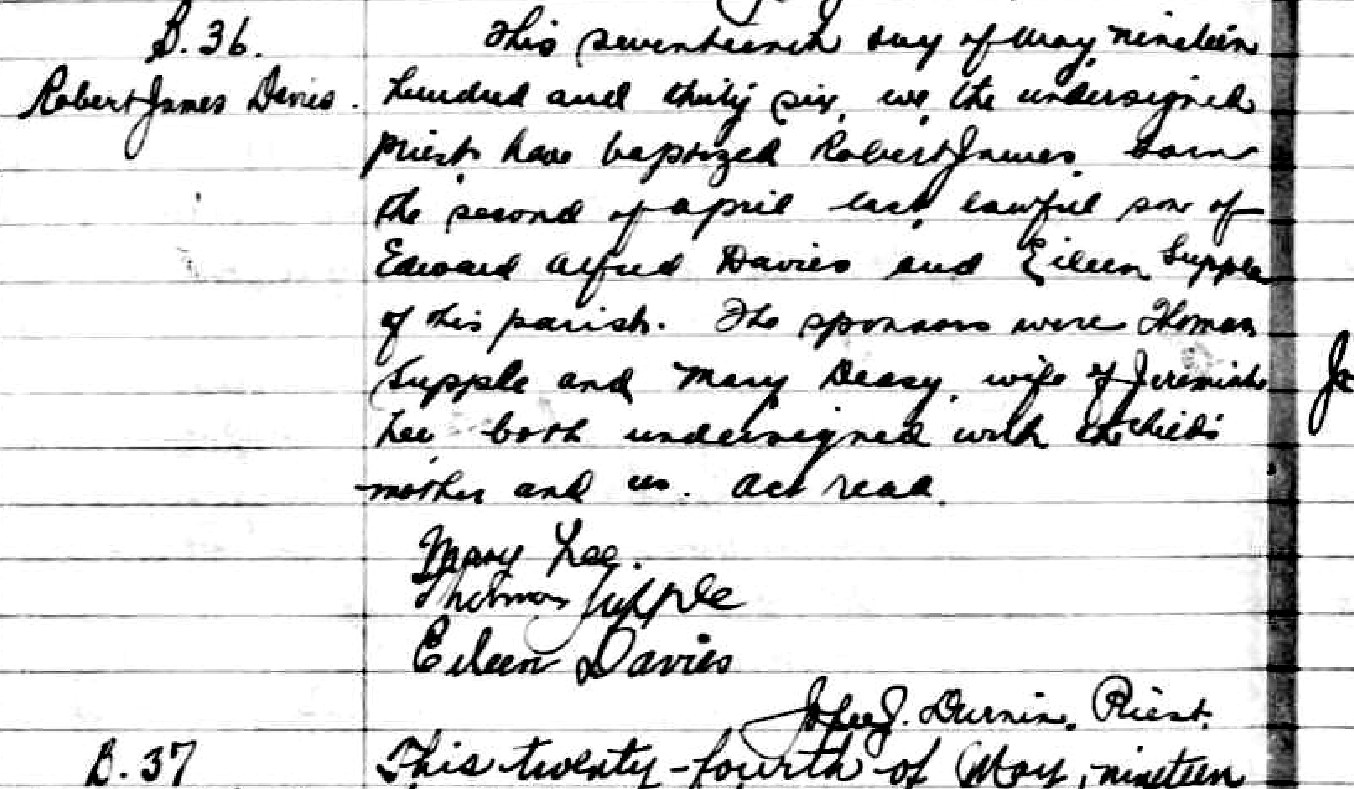
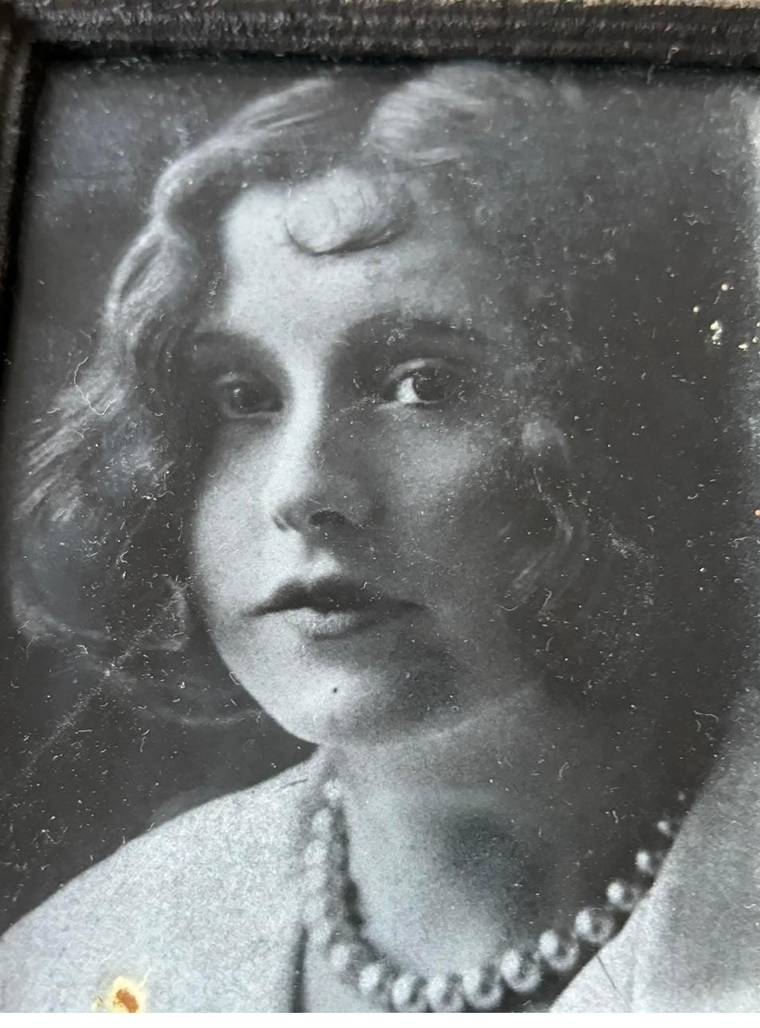
A church register written in 1936 gives us the strongest record of the date. Saint Aloysius parish in Montréal recorded Robert James Davies as born on 2 April 1936. It names his parents, Edward Alfred Davies and Eileen Supple, and his mother signed the page. The mystery is why the later seaman’s book says 1935.
The 1936 baptism entry.Eileen Davies's signature, six weeks after Bob was born.
WE KNOWBob was fifteen years and two months old when he joined his first ship. The booklet makes him exactly one year older.
WE DO NOT YET KNOWWho entered 1935, why they did it, or whether a sixteen-year minimum applied to this exact job.
Brenda later said during a recorded family visit that her dad had lied about his age and “was only 15.” The date supports the second part completely. The first part still needs the missing rule or another record before it becomes proven history.
That difference matters. Good history does not turn a strong theory into a fact just because the theory makes sense.
Bob's own teenage signature in the book.
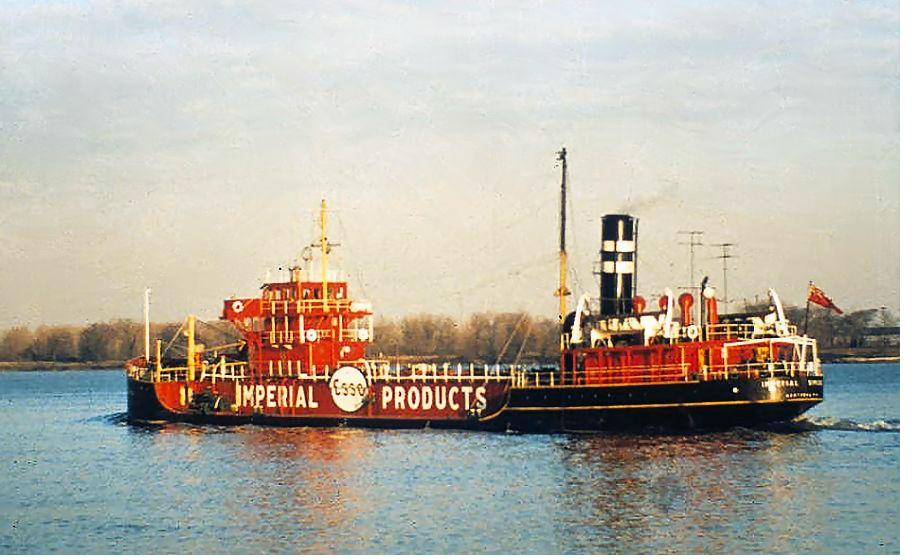
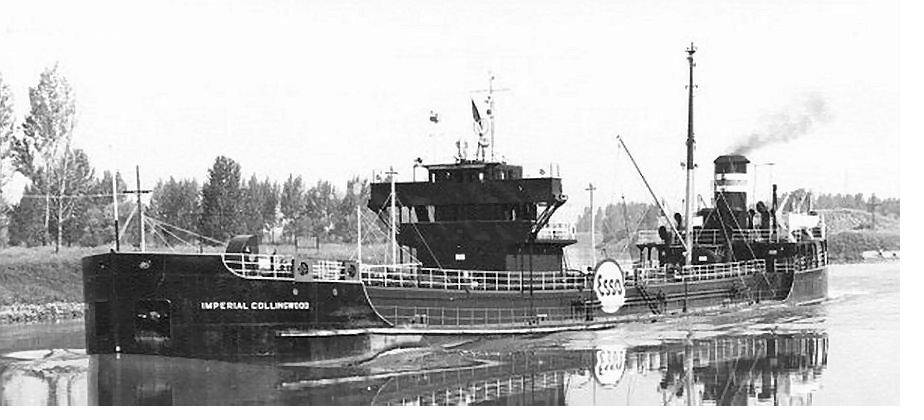
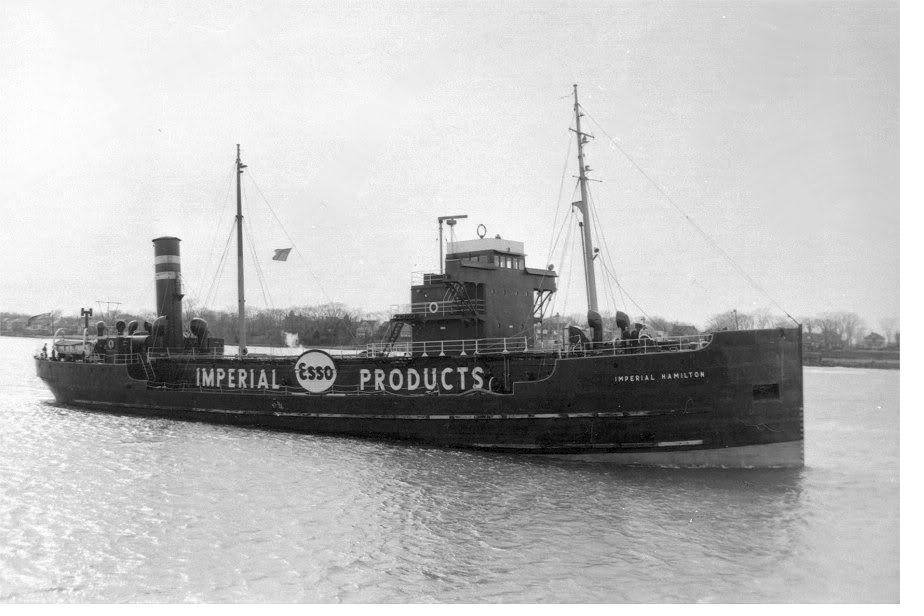
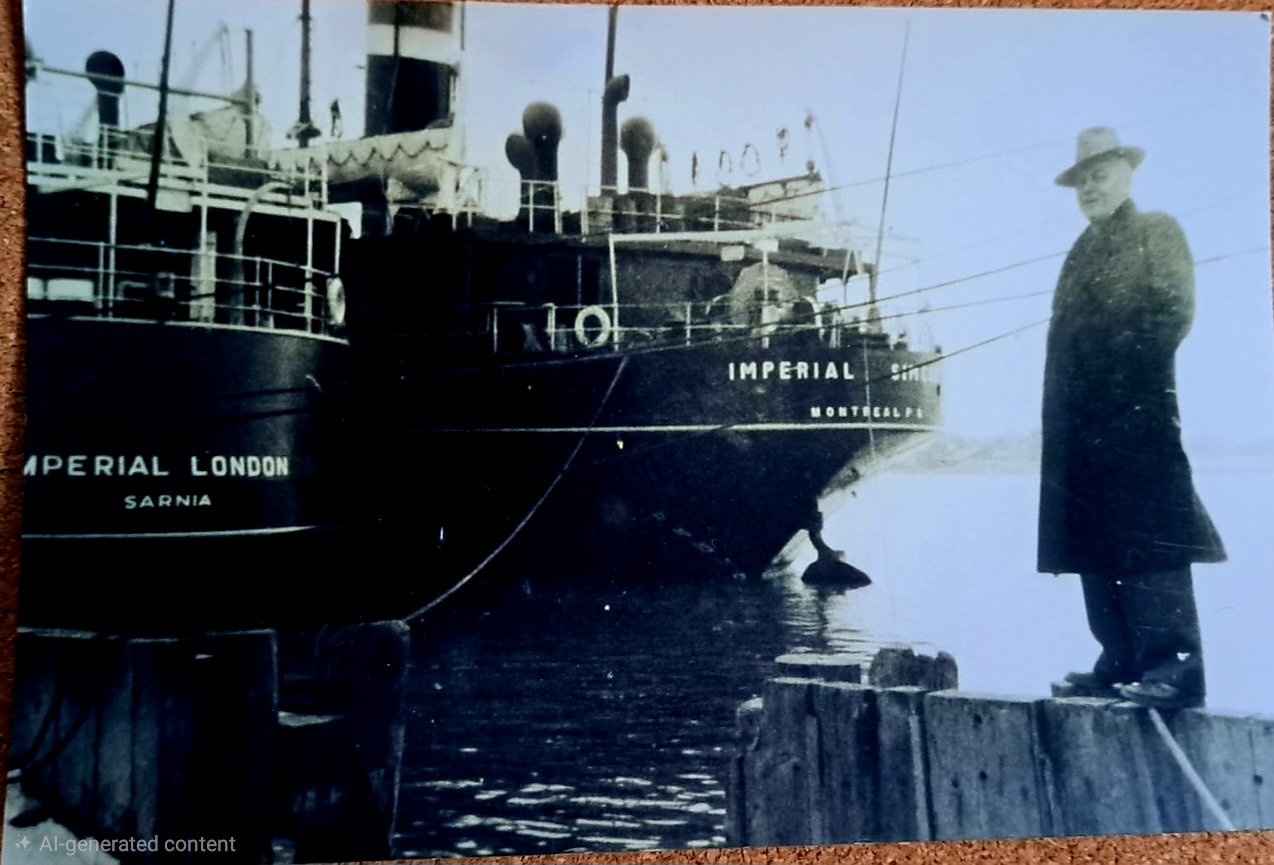
Imperial Simcoe Built 1930. Bob's first ship.Imperial London Launched 1948. Bob sailed her twice.Imperial Collingwood The engine-room summer.Imperial Hamilton Built in 1916. His last ship.
15Summer 1951 · Imperial Simcoe
A fourteen-year-old reader is only one birthday away from this first summer.
First ship
Ten weeks after his fifteenth birthday, Bob signed on at Sarnia as a deckhand. Deckhands handled the practical work of the deck department: cleaning and maintenance, lines, mooring, and whatever work the officers assigned.
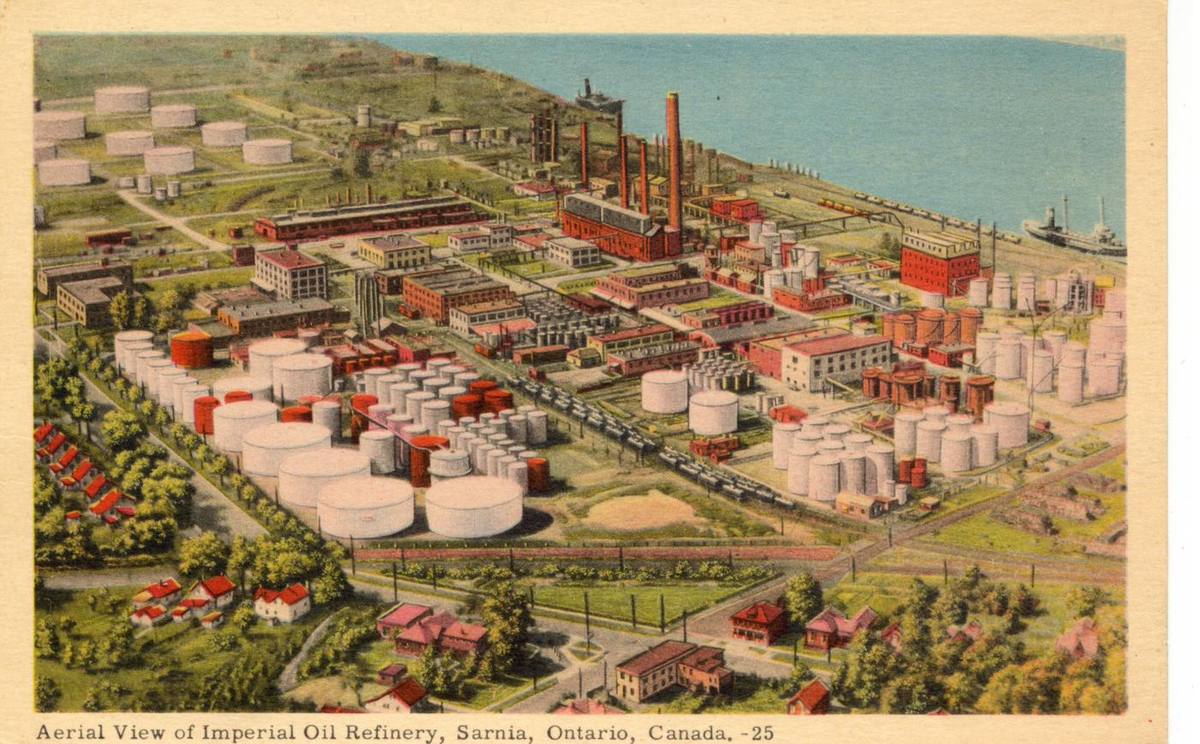
Imperial Oil refinery, Sarnia, around 1950. The tanker at the dock gives the scale of Bob's summer workplace.
Six weeks later the Simcoe discharged him in Montreal, the city where he had been born. He returned to Montreal at the end of the next summer too.
Five years before Bob's first voyage, Great Lakes seamen had won an eight-hour day after a major strike. That labour history will matter again later, when the teenage deckhand becomes an adult refinery worker and union man.
16Summer 1952 · Imperial London
At sixteen, Bob was still a high-school student — but this was already his second summer aboard.
The pencil summer
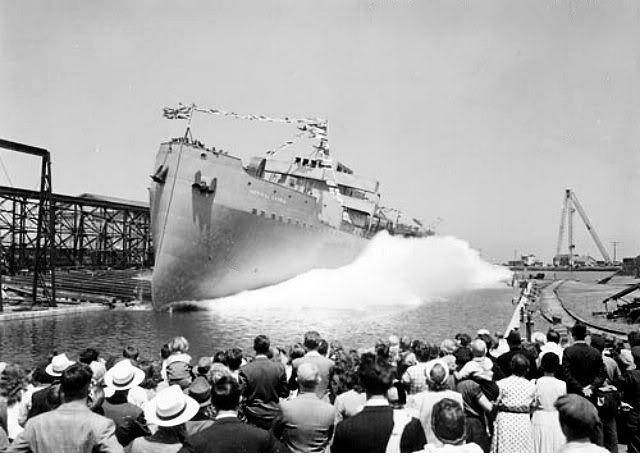
The Imperial London was almost new: launched at Collingwood in 1948, only four years before Bob joined her. His ten-week engagement is the faded pencil row in the book.
17Summer 1953 · Imperial Collingwood
By seventeen, the job changed: Bob moved below decks into the engine room as a wiper.
The engine room, during a remarkable summer
Bob's job changed to wiper, an entry-level engine-room rating. The surrounding dates are unusually vivid:
21 May: a violent tornado struck Sarnia and Lambton County, killing seven people and injuring more than a hundred.
2 June: Queen Elizabeth II was crowned.
6 June: Bob signed aboard the Imperial Collingwood, sixteen days after the tornado.
27 July: the Korean Armistice Agreement was signed while Bob was still aboard. We do not know when or how he heard the news.
14 August: he signed off at Sarnia. VERY GOOD · VERY GOOD.
Those events tell us what was happening around him. They do not tell us what he thought. Nobody wrote that part down.
18Summer 1954 · Imperial London
At eighteen, he returned to the Imperial London for the longest engagement recorded in the book.
Back aboard
Bob returned to the London for eleven weeks, his longest engagement. That same year construction began on the modern St. Lawrence Seaway. He was working a shipping system that was already being rebuilt.
19Summer 1955 · Imperial Hamilton
At nineteen, just after high school, Bob went aboard for the fifth and final time.
Last ship
The Hamilton was by far the oldest ship he worked on. Built in 1916 as Sarnolite, she was thirty-nine years old when Bob joined her. He stepped off on 18 August 1955. As far as the family knows, he never worked a ship again.
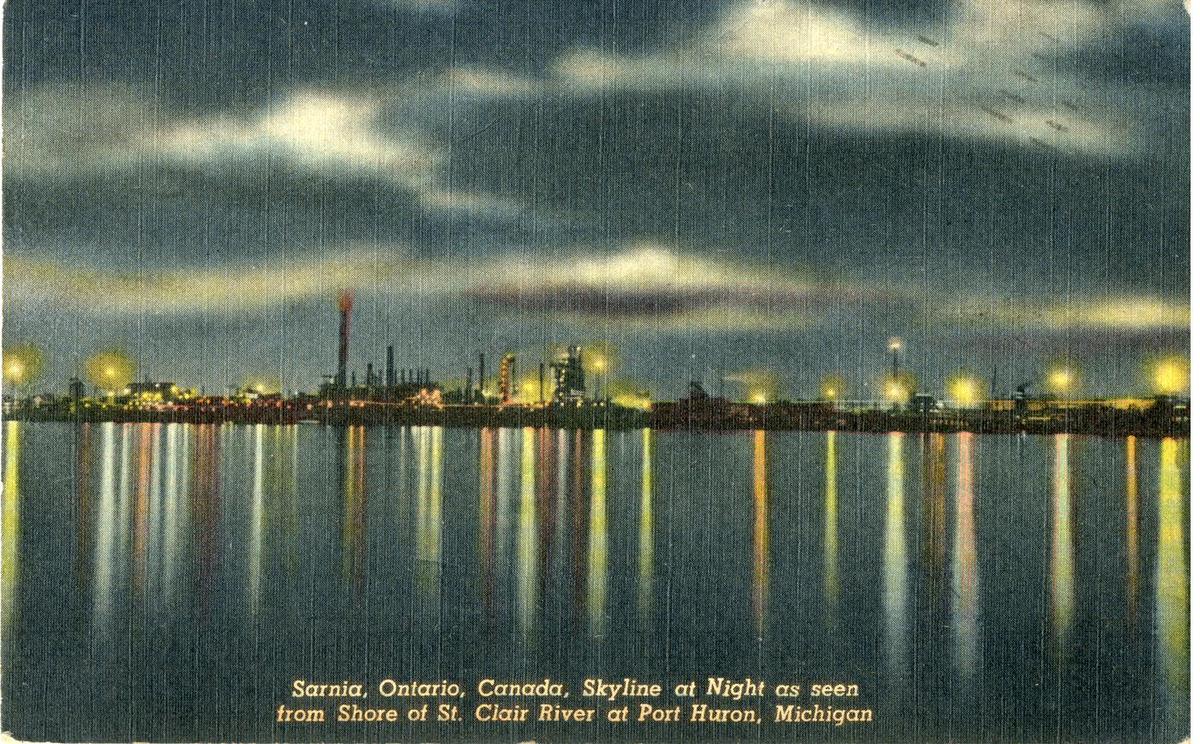
Sarnia from Port Huron, postmarked 1955 — the year Bob's seaman's book stopped.
Part III
Outside the Ships
The tanker entries are only the paper trail. School, family, baseball and the world around Bob show the teenager who existed between the voyages.
The other nine months
The Bob his classmates knew
Ships can take over this story because ships leave records. But they were only his school holidays. The rest of the year Bob was a student, athlete and friend.
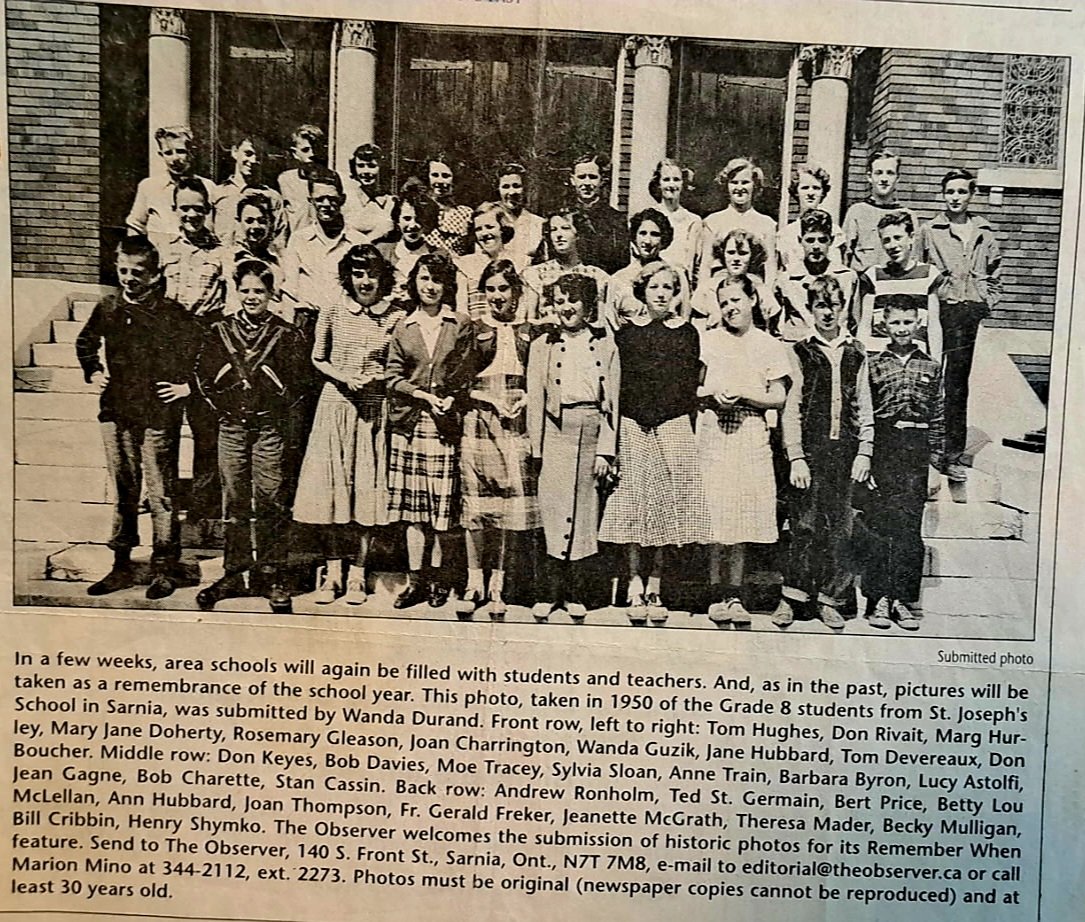
Grade 8, St. Joseph's School, 1950. Bob is named in the class list. His brother Ted later recognized him, but the exact face pointed out was not recorded.
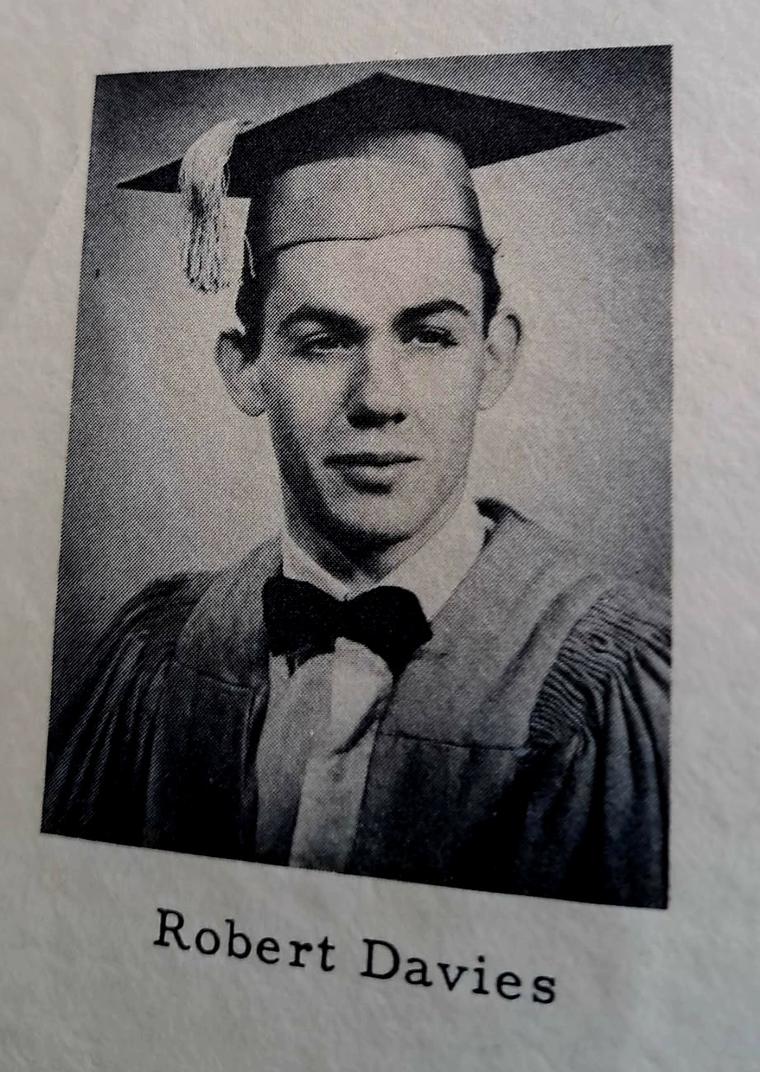
He entered St. Patrick's High School in 1950 and graduated in 1955. That means the five lines in the seaman's book match the five summers of high school exactly.
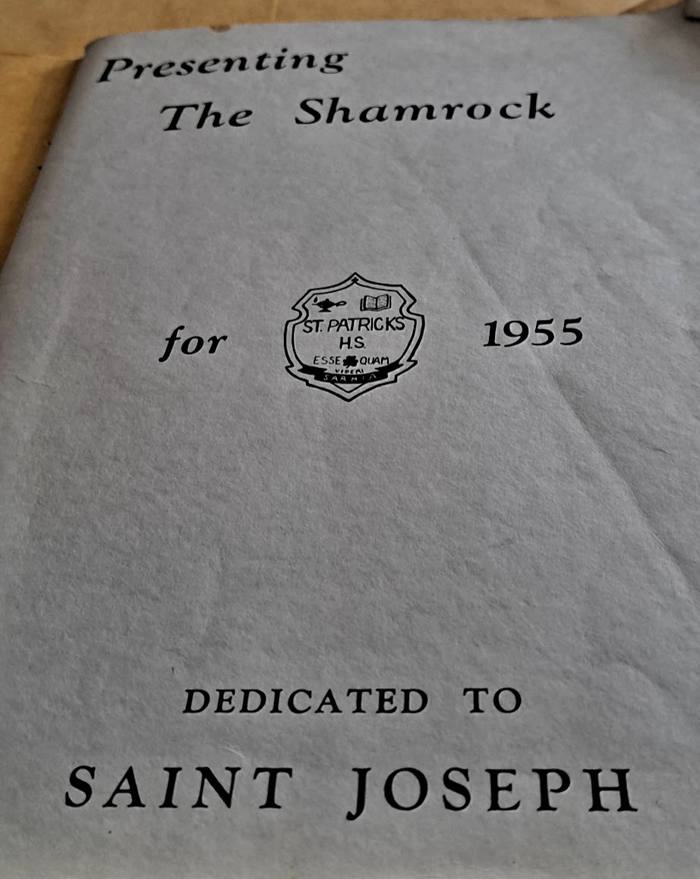
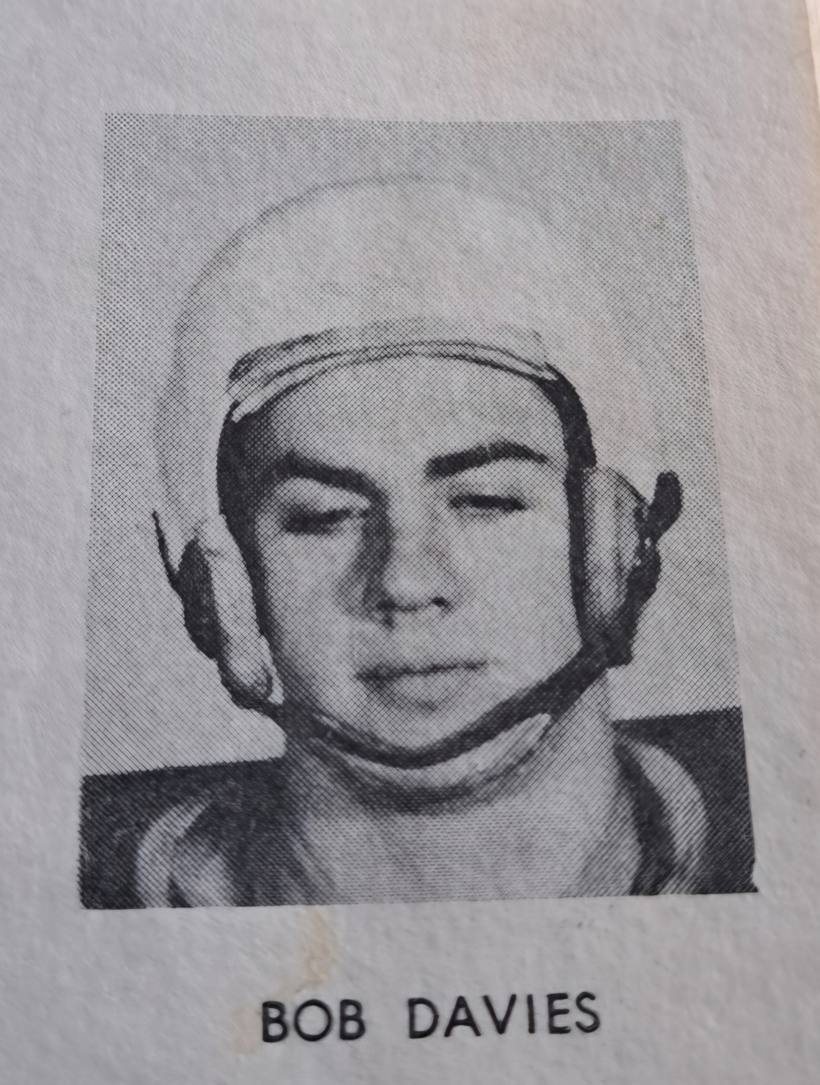
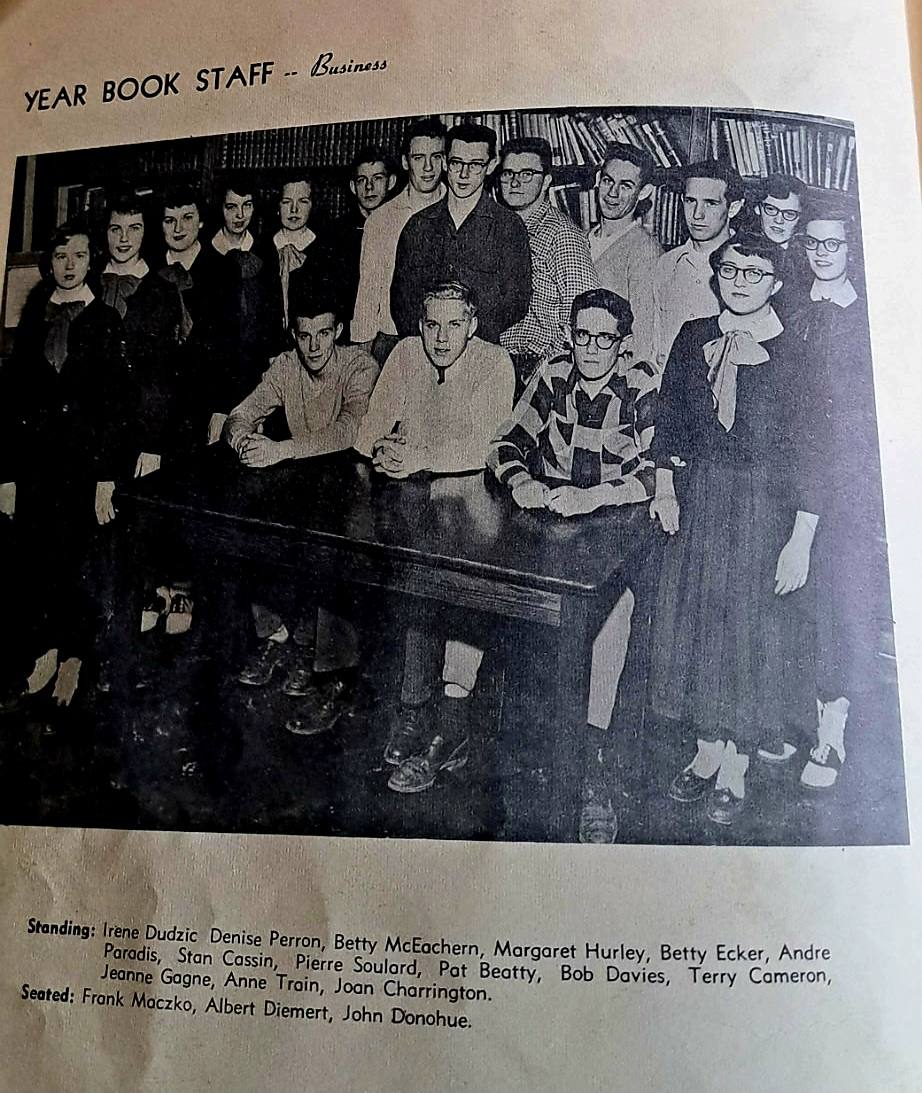
The Shamrock, 1955.Fighting Irish football.Yearbook business staff.
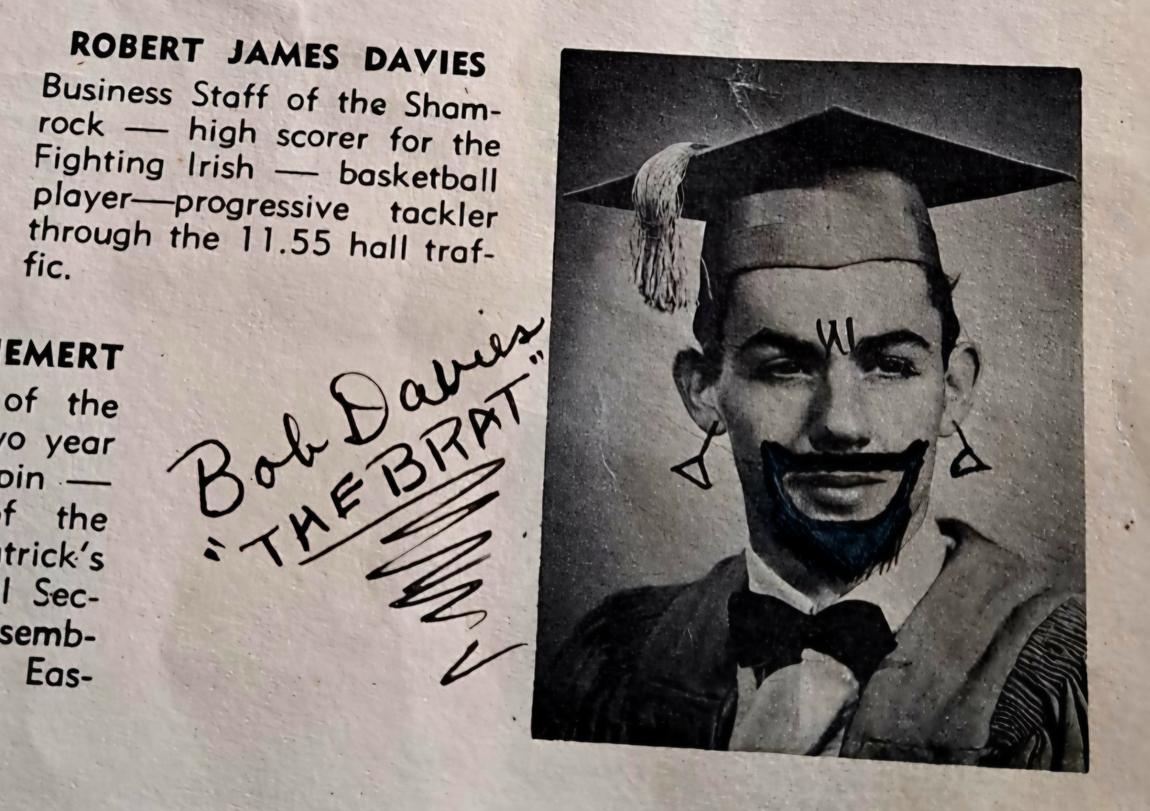
The yearbook calls him a basketball player and “high scorer for the Fighting Irish.” Remember the government description: five foot five. He was not physically imposing. Whatever made him a high scorer came from somewhere else.
VERY GOOD
SAME KID
THE BRAT
Then comes the page that changes the family picture of him. Somebody attacked his graduation portrait with a pen: beard, moustache, earrings, a “W” on the forehead. Beside it appears Bob Davies, “THE BRAT.”
The marked-up graduation page. Who drew the additions and who supplied the nickname are still unknown.
Five ship officers saw him at work and wrote VERY GOOD. Somebody at school saw the same teenager and wrote THE BRAT. Neither has to cancel the other. People look different depending on who is holding the pen.
Robert Davies, graduate, 1955 — the clean version.
The father behind the summer job
What kind of dad sends a fifteen-year-old to sea?
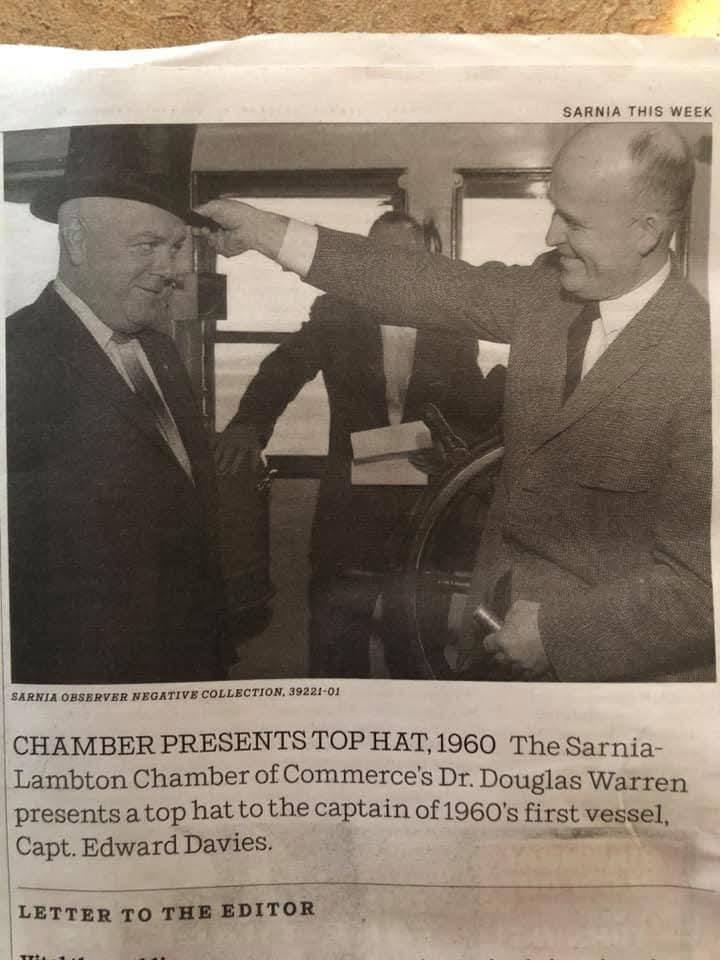
In Bob's case, a father who had spent almost his entire life around ships.
Captain Edward Davies in 1960, receiving Sarnia's ceremonial first-ship-of-the-season top hat.
Edward Davies was born in Halifax in 1905 into a large family. His father died in 1915 and his mother in 1916, leaving him orphaned at about ten. Family memory said his older sisters helped raise him. We can now prove part of that story: the 1921 census shows a fifteen-year-old Alfred Davies living with one older sister and her young family in Halifax, and the surrounding family records identify him with very high confidence as Edward. We still do not know exactly where he lived in every year after his parents died.
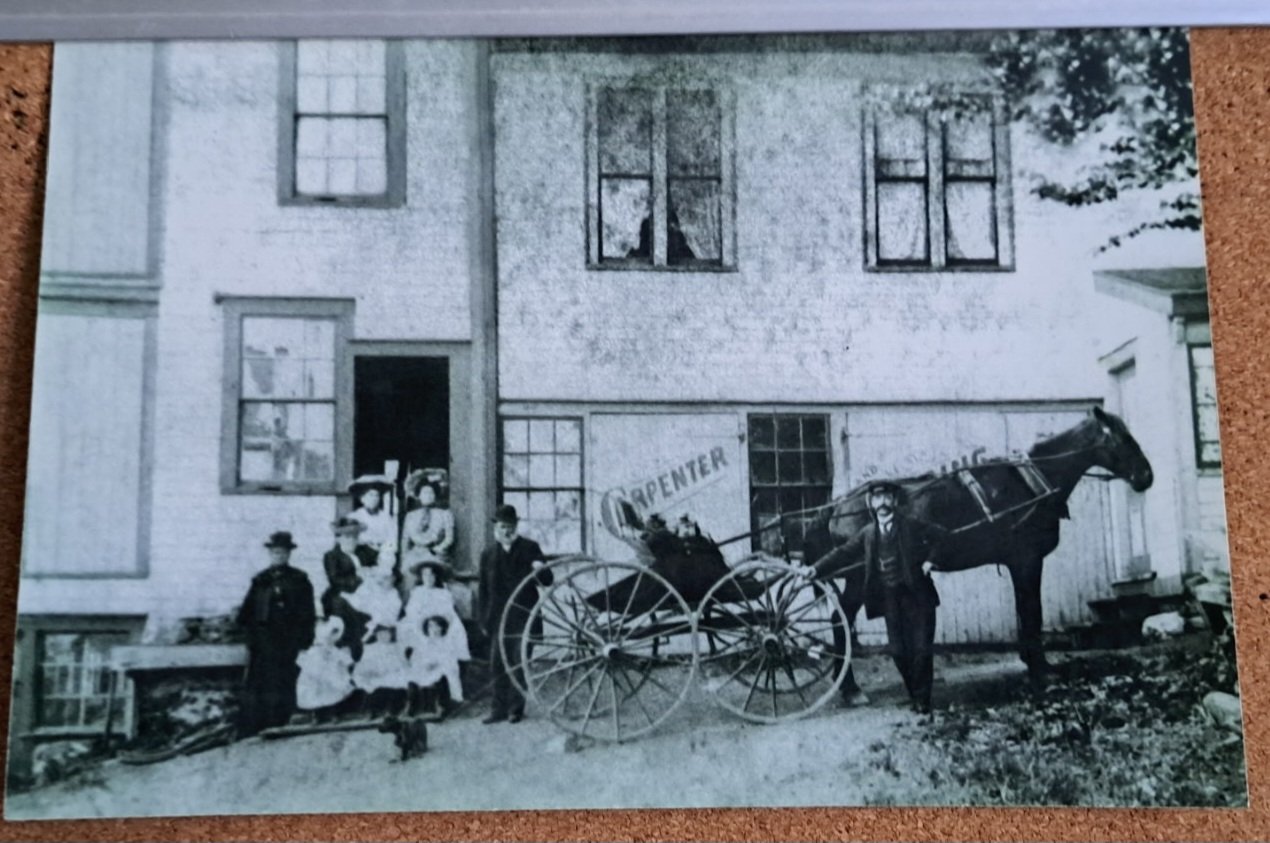
The family in 1904, before Edward was born.Edward as a captain beside Imperial Oil tankers.
A 1945 Imperial Oil magazine gives us something much stronger than family legend. It identifies Captain E. A. Davies as master of the Sarnolite, says he had become a master in 1932, and reports that he had received the O.B.E. and served as convoy commodore on seventeen wartime convoys.
The official appointment has now been found too. The Canada Gazette of 1 January 1945 names Captain Edward Alfred Davies as an Officer of the Order of the British Empire. That government notice closes the old O.B.E.-versus-British-Empire-Medal confusion in favour of the O.B.E.
Convoy commodore: a senior merchant-ship master responsible for organizing and controlling the merchant ships travelling together under naval escort. Edward was a merchant captain, not — from the evidence found so far — an officer of the Royal Canadian Navy.
There is one odd line in the 1945 company article: it says Edward first signed on as a seaman in 1907. The family chronology says he was born in 1905, so that cannot be literally right. A 1944 company recommendation says he had worked for Imperial Oil since 1926, which fits the family dates much better. Until another record settles it, the 1907 line stays labelled as a contradiction instead of becoming part of the story.
Edward's wartime record matters here for a simpler reason: when he arranged Bob's first berth, ships were not an abstract idea to him. They had been his working world for decades. The surviving evidence does not tell us what lesson he thought his son would learn from being sent aboard.
Six years after the war, he arranged a peacetime Great Lakes berth for his fifteen-year-old son at the lowest level of the crew. We know that much. Anything more about Edward's purpose would be a guess.
There is one more remarkable link. The Sarnolite that Edward commanded was later renamed Imperial Hamilton. In 1955, that became Bob’s fifth and final tanker. Father and son sailed the same ship, about a decade apart.
Want the deeper Captain Ted story? The adult research appendix follows the records from his orphan years through the sister network and his wartime career. Read the Captain Ted appendix →
Reg, Robert, Joan, Ted and Diane — the five Davies siblings as adults.
A later echo
His last ship explodes
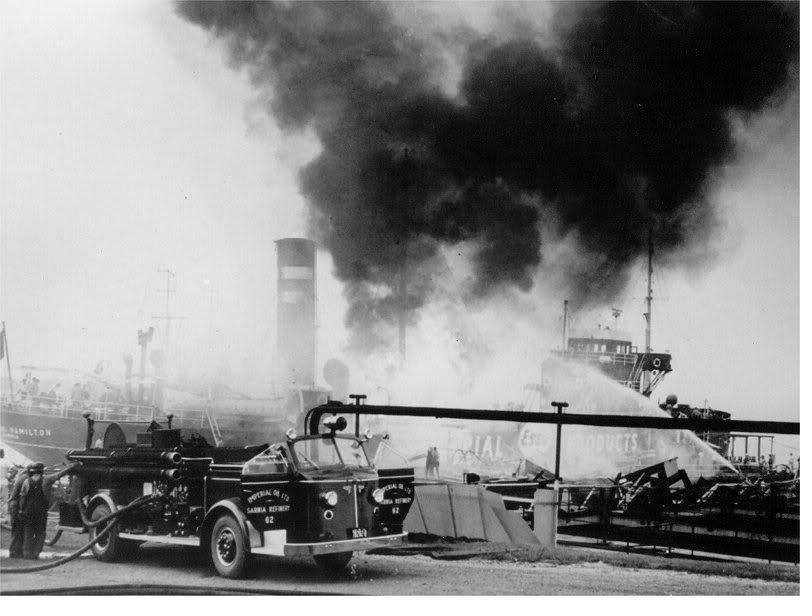
Bob walked off the Imperial Hamilton in August 1955. On 4 September 1961, while loading gasoline at Imperial Oil's Sarnia terminal, the tanker exploded and burned.
The Imperial Hamilton burning at Sarnia, 1961.
The blast damaged the waterfront and destroyed a large section of dock. Five crew members were injured; nobody was killed. Investigators did not establish a definitive cause.
Bob was twenty-five and living in Sarnia. We do not know whether he saw his old ship burn or ever spoke about it. That is not a missing detail to fill with imagination. It is a question to ask.
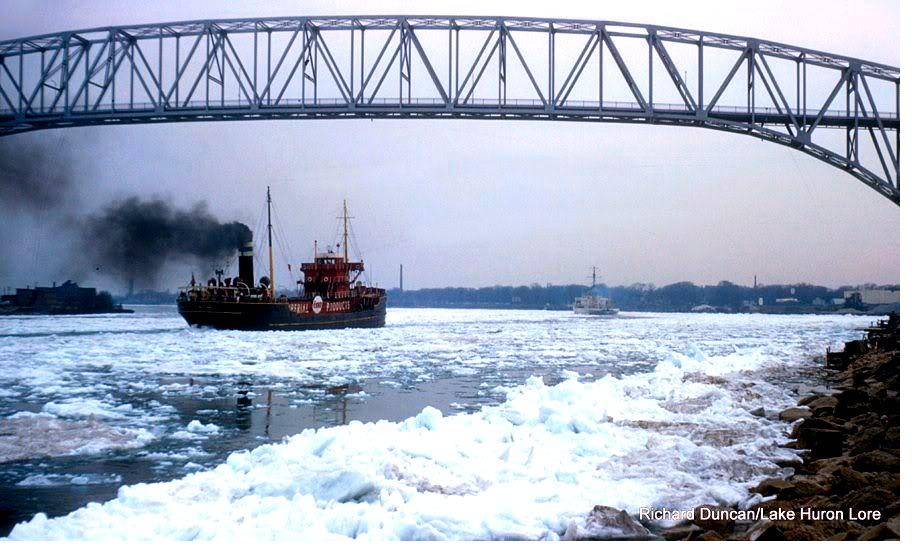
The Hamilton under the Blue Water Bridge in 1959, two years before the fire.
The thing he wanted instead
Baseball comes back
The ships are the unusual part of Bob's teenage story. Baseball may be the more important part of who he was.
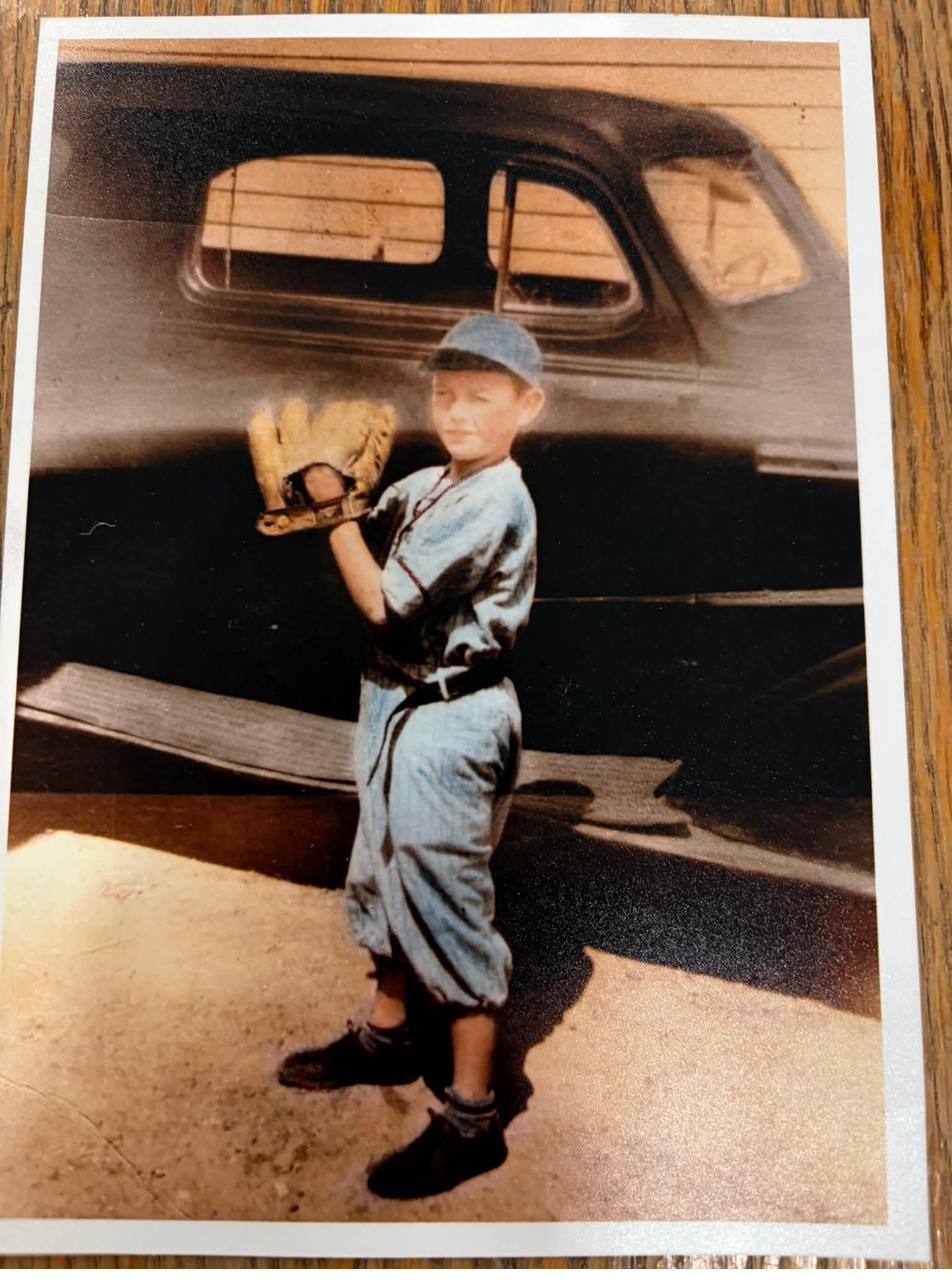
Bob as a boy, in uniform, with a catcher's glove. Exact date unknown.
Sarnia had a strong baseball culture. In 1952, while Bob was spending his summer on the Imperial London, the Sarnia Nationals won the Ontario Intermediate “A” championship. That does not prove Bob was connected to the team. It tells us the sport he wanted was very much alive in his town.
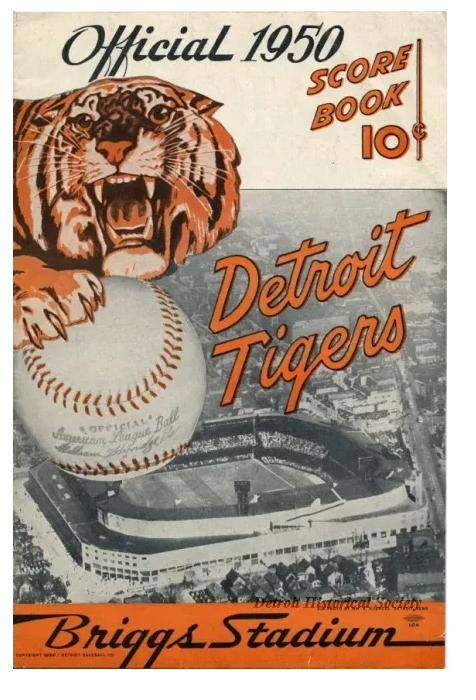
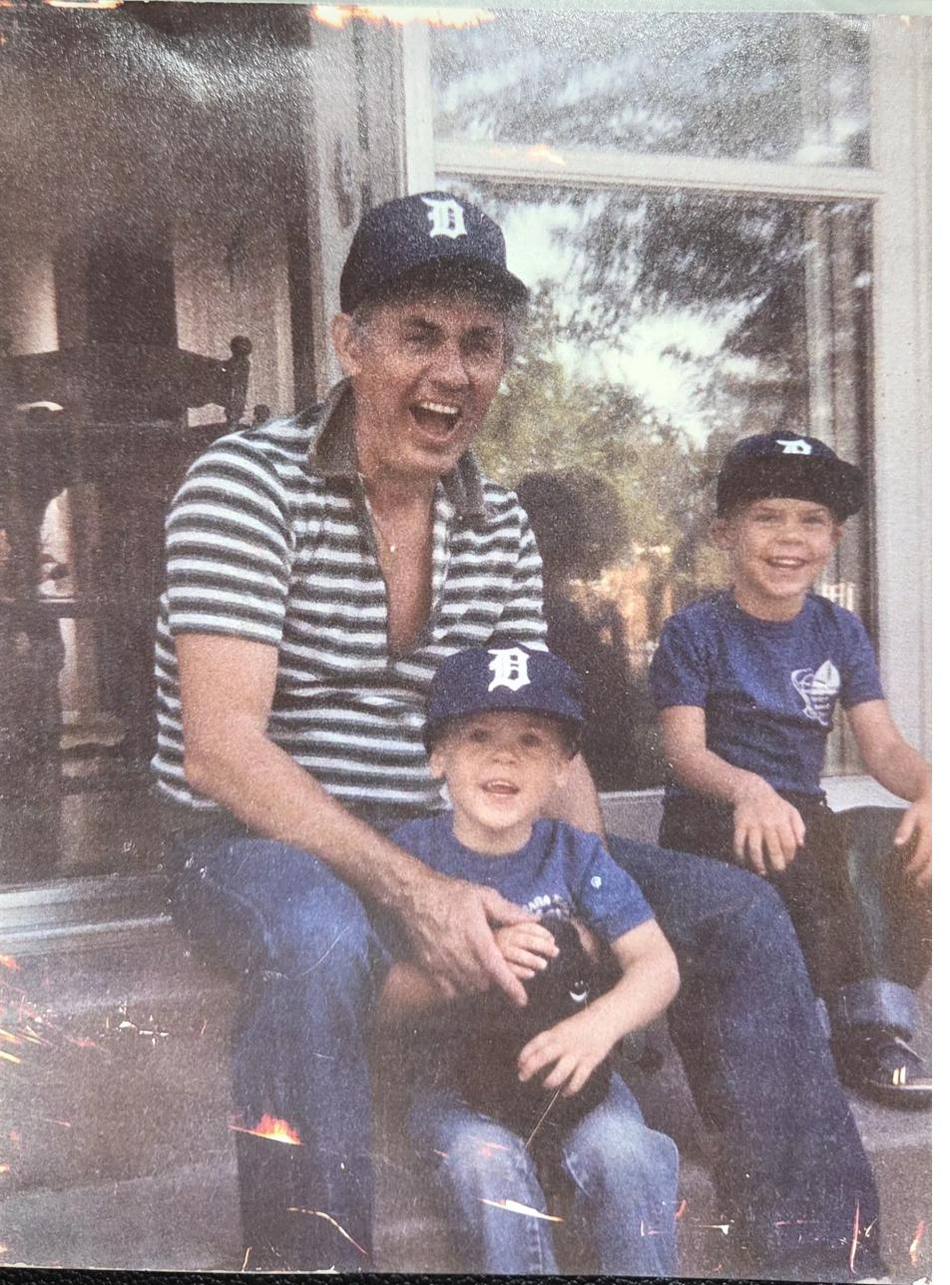
Detroit Tigers scorebook, 1950.Decades later: Bob with Brian and Greg in matching Tigers caps.
Grown-up Bob listened to Tigers games on the radio and crossed the river to Detroit for games. Whether the teenage Bob aboard those tankers already followed the Tigers is believable but unproven. Knowing and believing are neighbours, not twins.
Then the photograph turns up
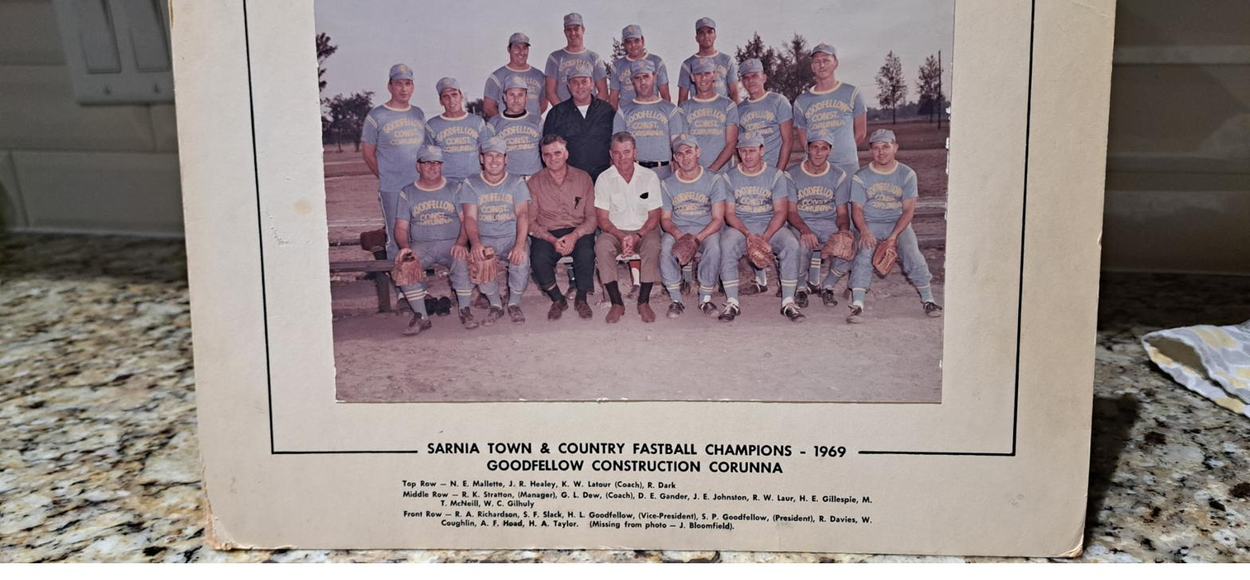
Sarnia Town & Country Fastball Champions, 1969. “R. Davies” is printed in the front-row name list.
Fourteen years after the final ship, Bob was on a championship fastball team. The boy who had wanted the diamond instead of the deck eventually got the diamond.
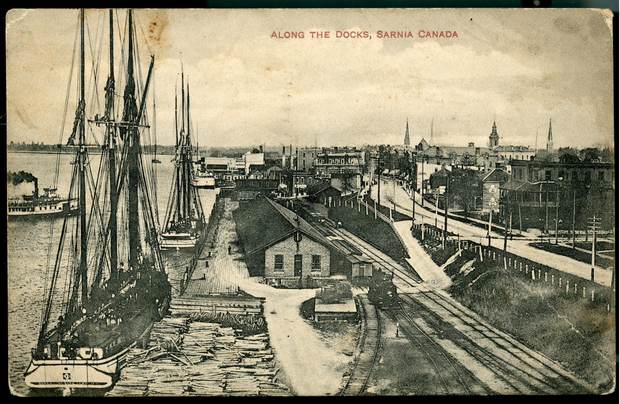
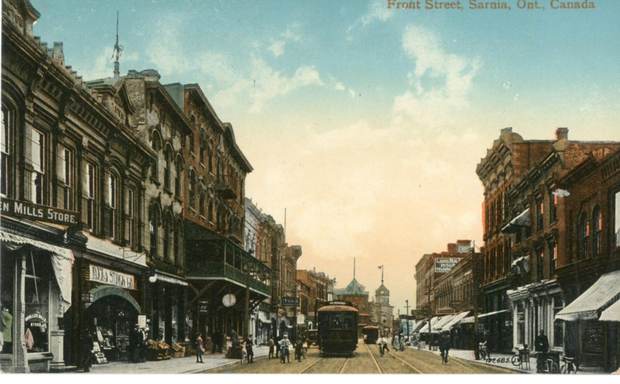
Sarnia docks, c. 1910.Front Street, c. 1910.Sarnia at night from Port Huron, 1955.
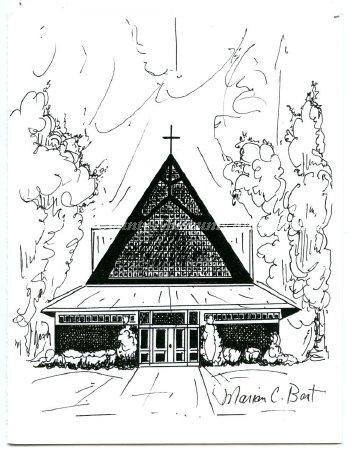
St. Benedict's, 1011 Oak Avenue — the family parish that appears again in Bob's later life.
Part IV
After Nineteen
The little book closes. The person in it keeps growing into the husband, father and grandfather the family remembers.
After nineteen
The book stops. His life starts.
In 1955 Bob graduated from St. Patrick's, worked one final summer aboard the Imperial Hamilton, and closed the seaman's book for good.
His daughter Judy later wrote one sentence that opens another possible life: her dad had always wanted to go to university and become a teacher. He did not. His brothers Ted and Reg did.
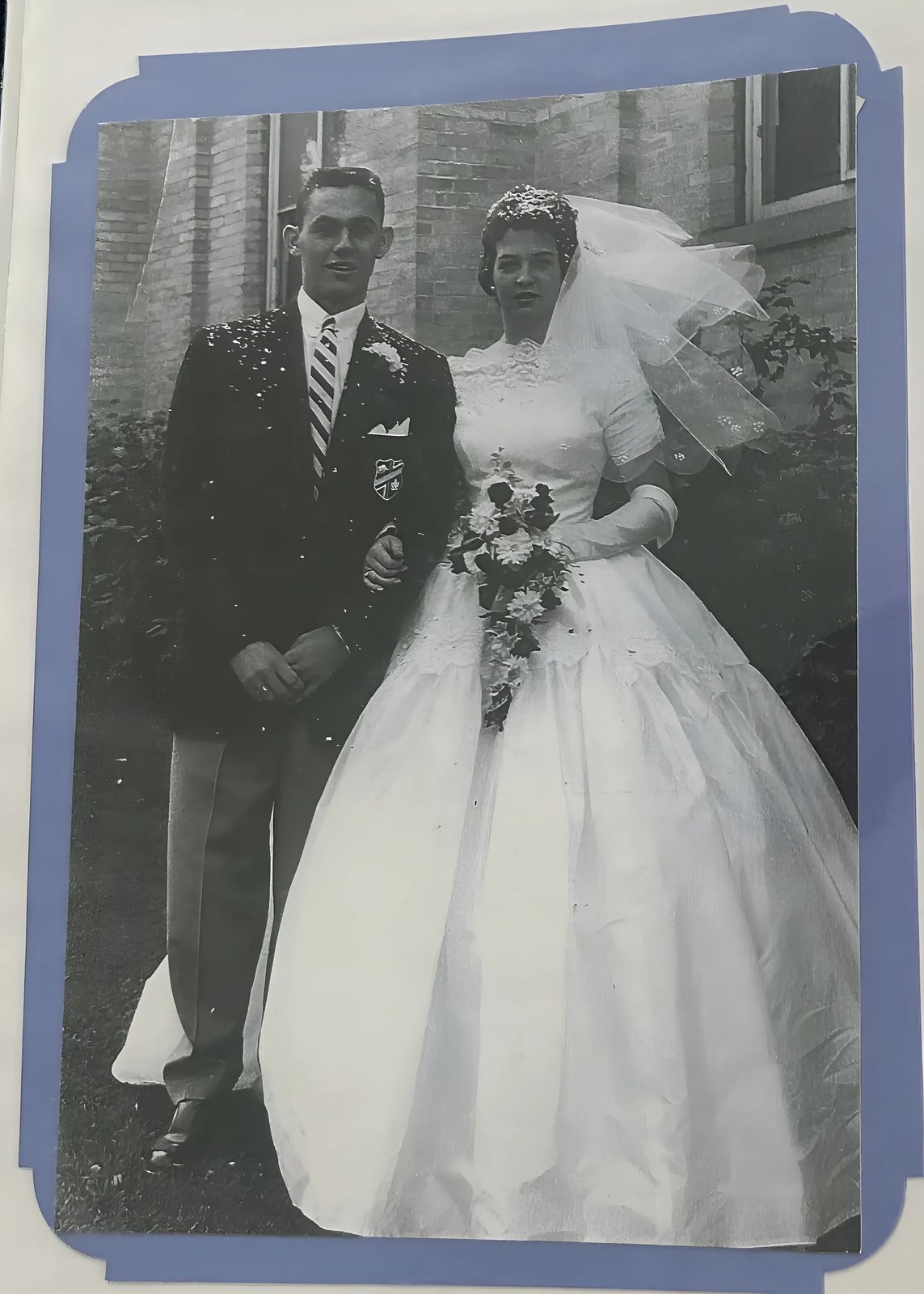
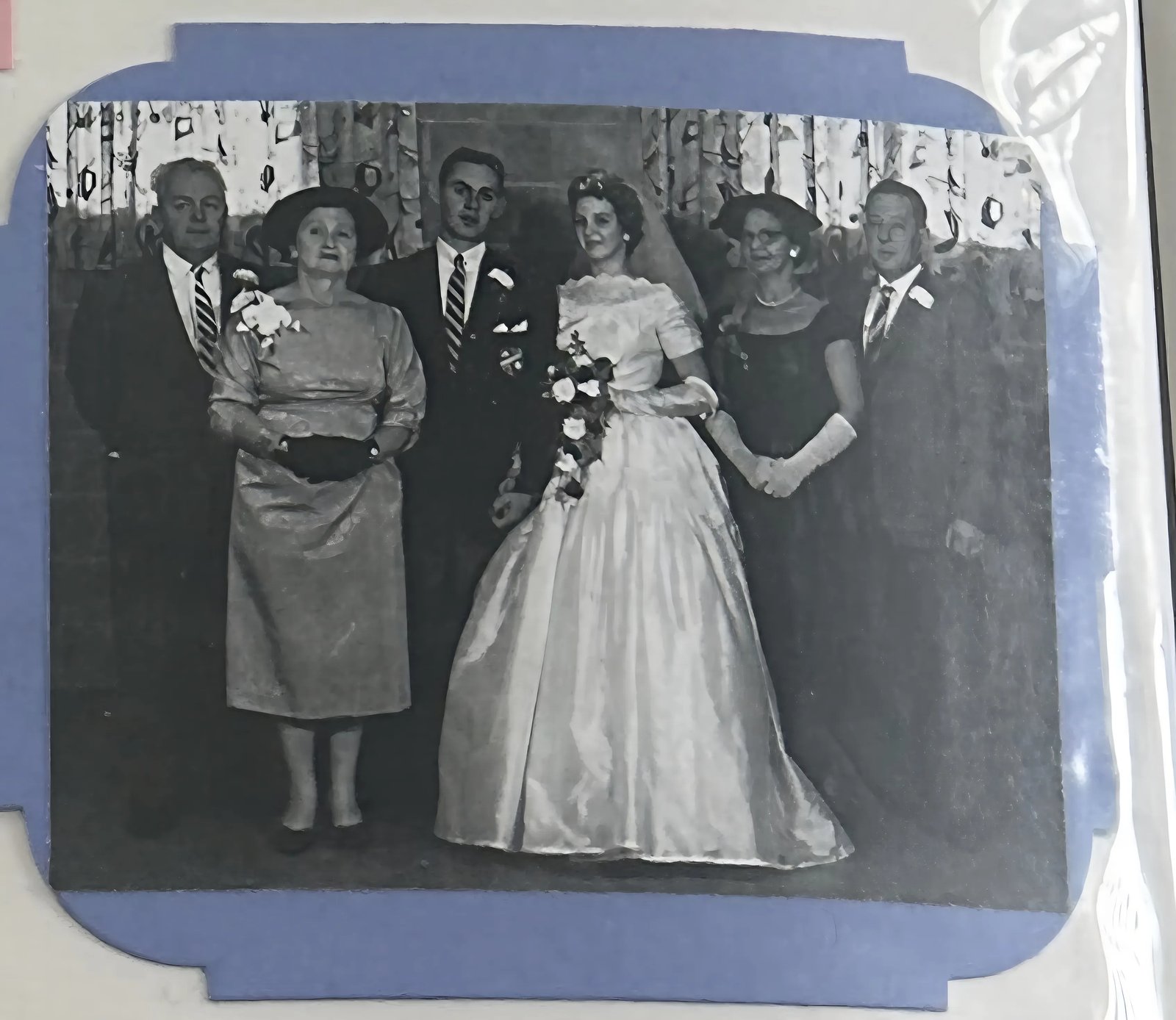
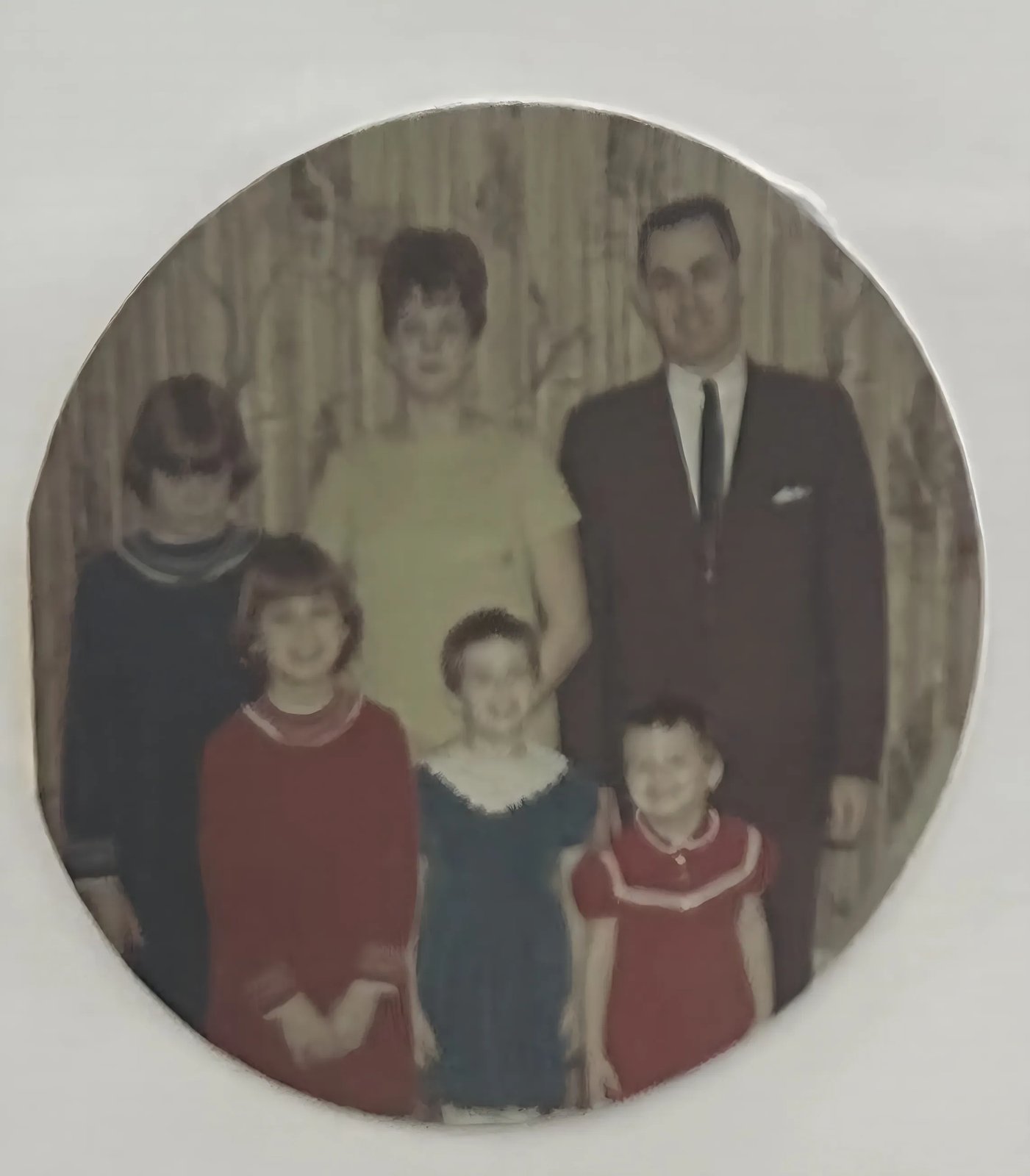
Bob married Donna Strevel on 5 October 1957. They raised four daughters — Brenda, Cheryl, Judy and Sandra. He worked for Imperial Oil for the rest of his working life and is remembered by the family as a committed union man.
Sandra and Brenda remember Donna loving Christmas: decorating the house, shopping for everyone, making a big dinner and putting a lot of time into the day. Bob always carved the turkey at Thanksgiving and Christmas; Brian still remembers the electric knife.
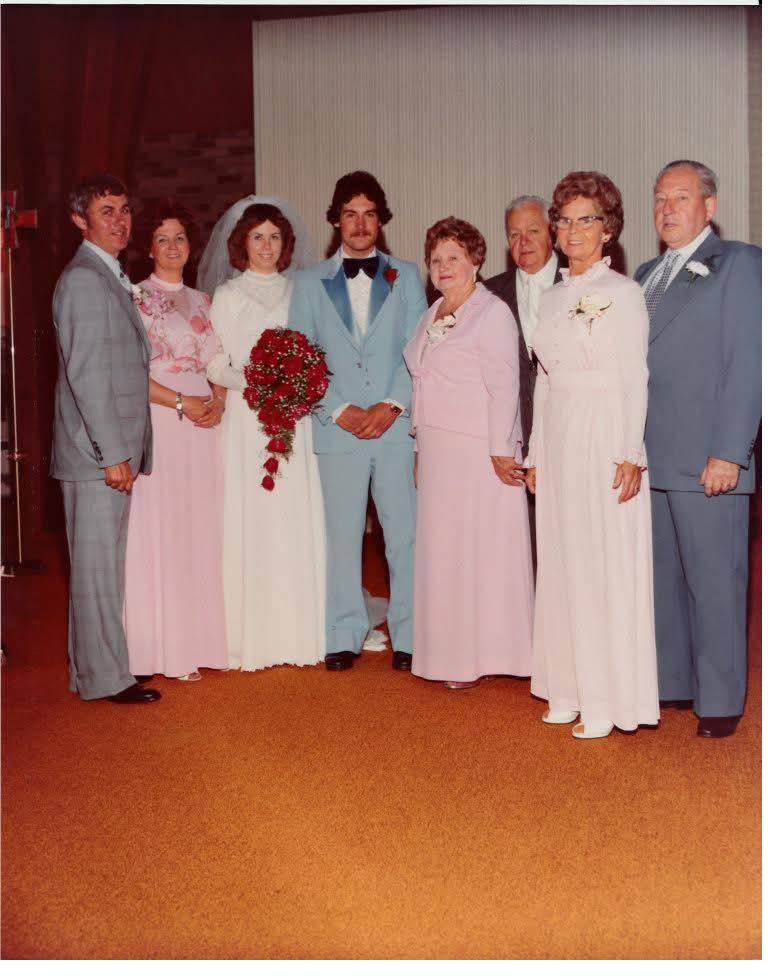
Bob and Donna, 5 October 1957. Bob was twenty-one.The couple with both sets of parents.
Bob and Donna with Brenda, Cheryl, Judy and Sandra, oldest to youngest.
A strange family echo
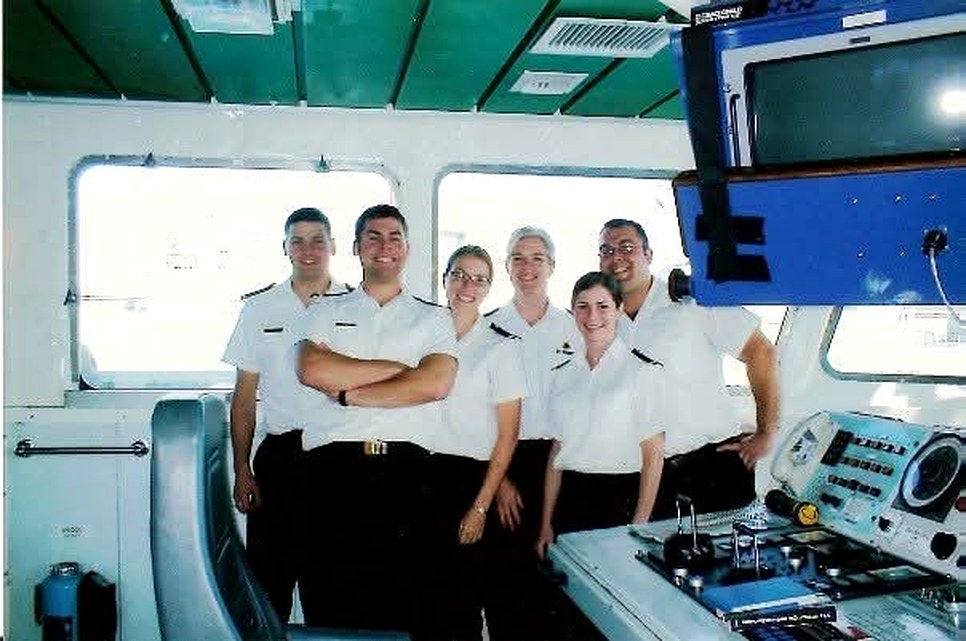
Almost fifty years after Bob's ship summers, his grandson Brian became a naval officer. In 2003 he sailed HMCS Kingston from Halifax up the St. Lawrence and into the Great Lakes — across some of the same water Bob had travelled as a teenager.
HMCS Kingston, summer 2003. Brian is at the front.
Brian has said that he did not want that period at sea either, but he finished it. That does not tell us how Bob felt seventy years earlier. It does make an odd family rhyme: same river, different generation, unwanted work completed anyway.
In February 2004, Brian was back on naval training in Newfoundland and called Bob from there. They talked. It was the last conversation they ever had; Bob died that May. That belongs to Brian’s story, not as evidence of how Bob felt about ships, but because it is one of the last family memories before the story turns fully to the man everyone knew.
The part no archive can replace
The man the family knew
Everything so far has been about finding the teenager inside old paper. Now turn the direction around. What did that teenager become?
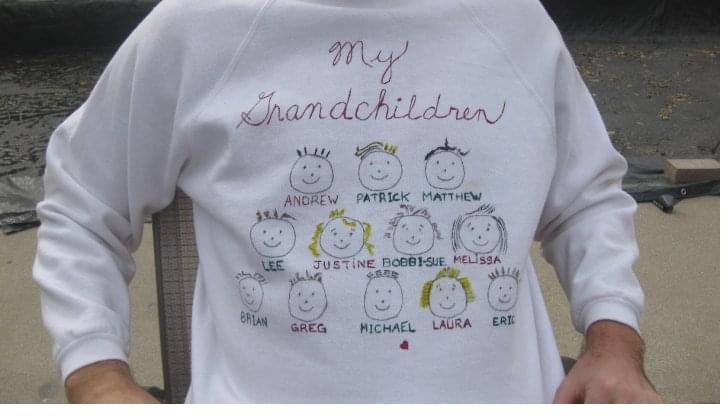
Three generations at Brenda and George's wedding, 20 May 1978.Twelve grandchildren: Andrew, Patrick, Matthew, Lee, Justine, Bobbi-Sue, Melissa, Brian, Greg, Michael, Laura and Eric.
Judy remembers waiting for her dad to come home from the refinery and jumping into his arms from the landing. He saved her a snack from his lunchbox. When she became a fastball pitcher, he caught for her after work and counted a hundred pitches.
Sandra remembers another ordinary routine: Bob came home from work, went jogging, had dinner, and then spoke to his father, Captain Ted, on the phone just after dinner every day. She also remembers him loving evenings with the grandchildren around the table and pool, with a sports game often on in the family room.
Melissa remembers a loonie or toonie for penny candy and hours in the pool. Brian remembers going with Bob to the St. Benedict's breakfast programme and, around Grade 8 or 9, helping him deliver Christmas hampers to families who needed them.
Four sisters, five lakes
Bob and Donna’s four daughters stayed close as adults. In June 2019 they tried something memorable on a sister trip: dip in all five Great Lakes in one day. Their rule was that everyone had to go under. Sandra remembers that Brenda stopped at her shoulders.
“Sisters of the Great Lakes,” June 2019.
Education became common in the family, but that does not prove Bob’s old ambition caused it. Ted and Reg became teachers and were later on staff at St. Patrick’s when Brian and Greg attended. Judy and Sandra taught, and grandchildren Michael, Laura and Melissa went into education too. The pattern is real; the reason for it is not something the evidence can tell us.
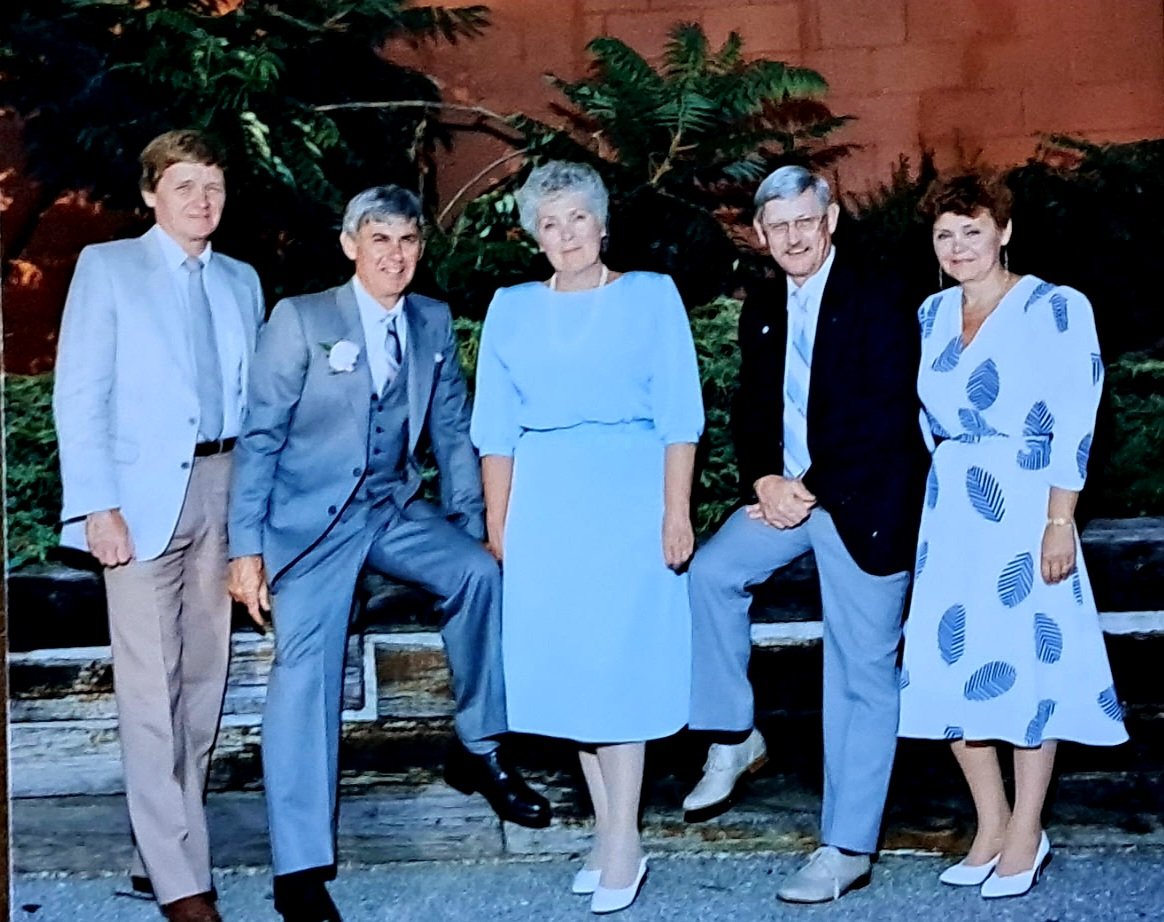
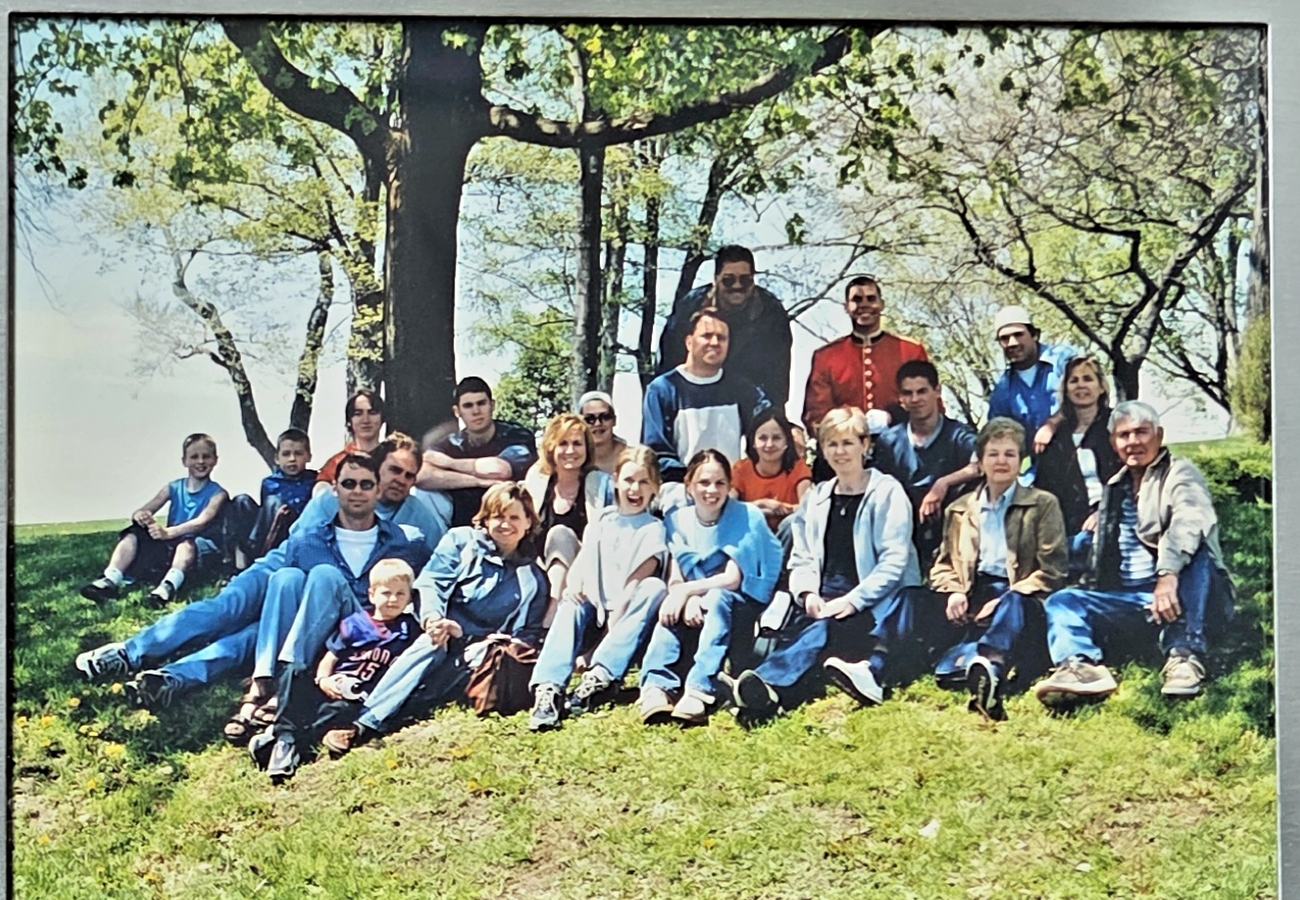
Brian’s Royal Military College graduation, Kingston, May 2003. Bob is at the far right in the tan jacket.This is the Bob most of the family remembers.
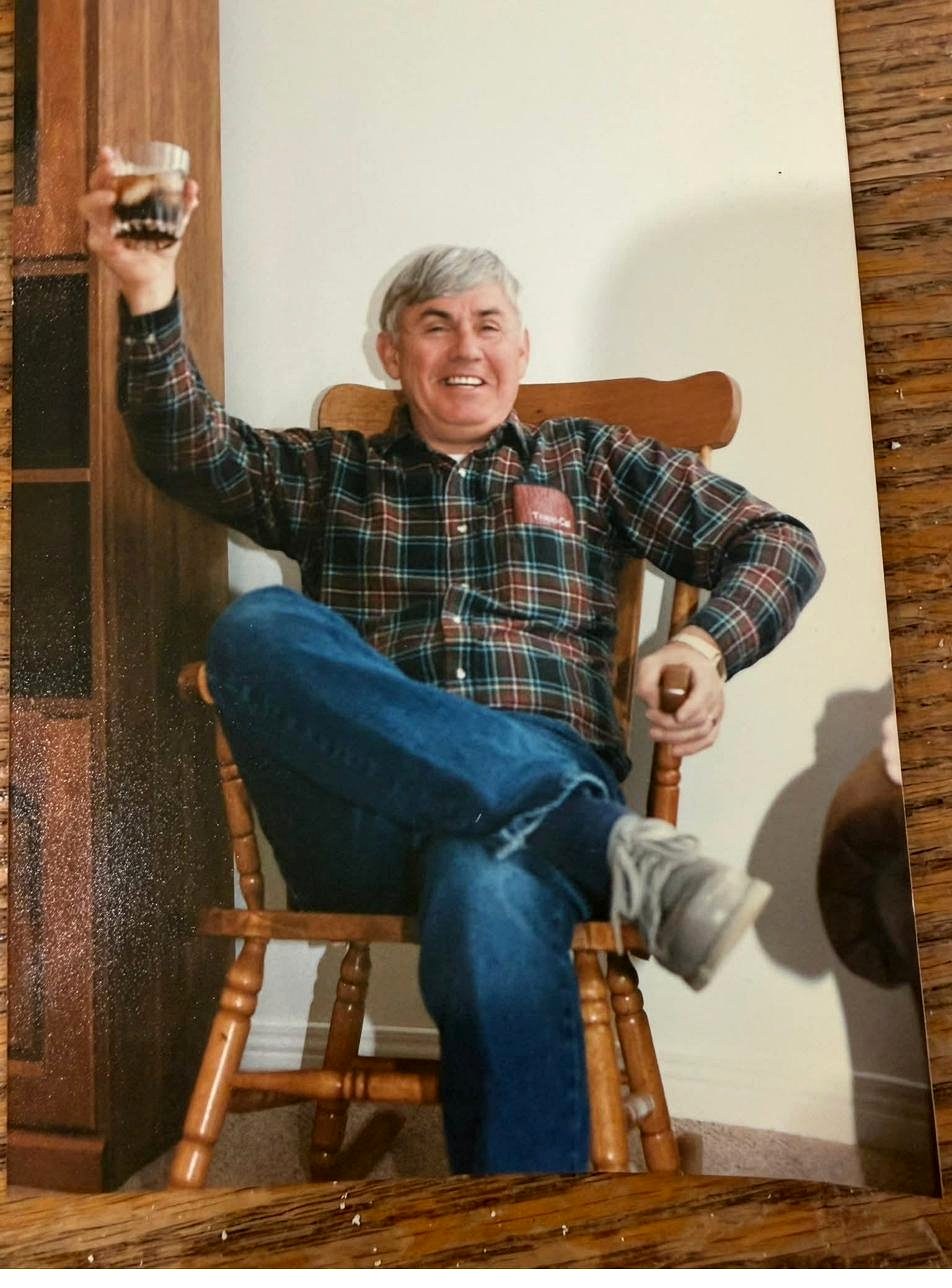
At the start of this story, Bob is fifteen: five foot five, blue eyes, blond hair, wanting baseball and getting a tanker. At the end, he is the man in the rocking chair at the centre of a large family. Both are the same person.
That is why his age matters. History becomes different when the person in the old photograph stops looking “old-fashioned” and starts looking like somebody one school year ahead of you.